Candid Conversations with Digital Health Innovators & Business Leaders
Welcome to the Breaking Health Podcast
Conversations between VCs and entrepreneurs typically occur in boardrooms or coffee shops. In the Breaking Health Podcast, you get a seat at the table. Our hosts bring their investor insight to revealing conversations with the most disruptive CEOs in healthcare. Listen to understand how these leaders are building the companies – and fostering the cultures – that will change everything.
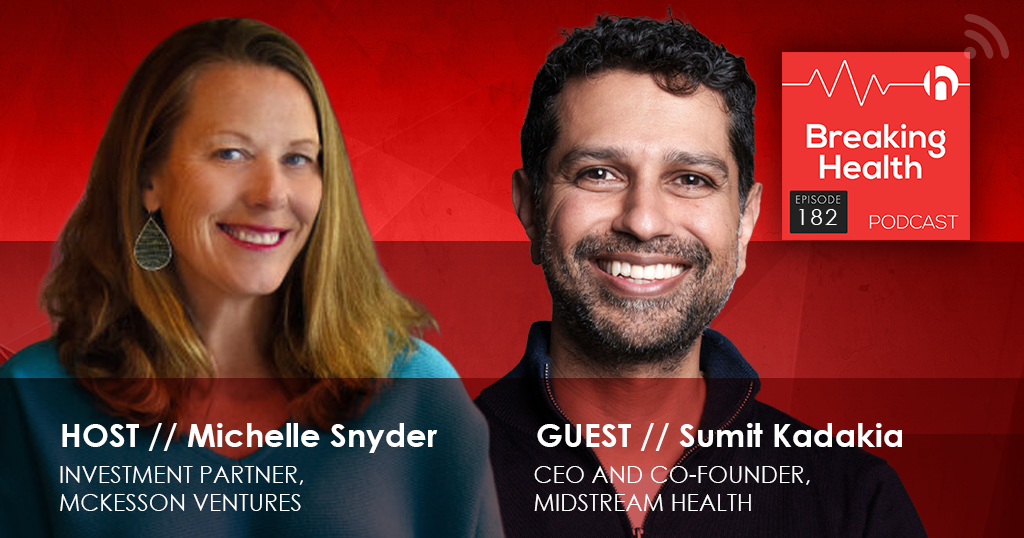
Money doesn’t just “disappear” from hospitals. It leaks through thousands of tiny cracks: contract terms no one can audit fast enough, pricing updates that lag for weeks, rebates that never get claimed, and invoices that don’t match what was negotiated. Host Michelle Snyder speaks with Sumit Kadakia, co-founder and CEO of Midstream Health, to talk about financial intelligence in health care and why the next wave of digital health can’t be only about revenue cycle management. Sumit shares why he believes providers have hit an inflection point where “more revenue” is no longer a strategy. Instead, health systems need a clearer, more atomic view of unit economics so they can recover margin they have already earned. He breaks down what Midstream is building: an autonomous financial operations platform he calls a “second financial brain” for CFO and COO teams, designed to prevent and recover financial leakage across supply chain, pharmacy, and managed care.
GUEST BIO
Sumit Kadakia, CEO and Co-Founder, Midstream Health
Sumit Kadakia is CEO and co-founder of Midstream Health, the autonomous financial operations platform purpose-built for health systems. He has spent his career finding value in places organizations had already written off, from upcycled food byproducts to the margin health systems leave on the table. Sumit most recently led operations and enterprise business at Truepill, where he launched virtual pharmacy programs for Optum and Mark Cuban Cost Plus Drug Company, and secured the company's URAC accreditation. Earlier, he founded Renewal Mill, a food upcycling company, and advised energy and materials clients at McKinsey & Company. He holds a bachelor’s degree from the Wharton School and a master’s degree from Yale University.
HOST BIO
Michelle Snyder, Investment Partner, McKesson Ventures
Michelle is a partner at McKesson Ventures. The firm invests in venture and growth stage companies that build innovative software and tech-enabled services businesses for the healthcare and pharma industries. The Ventures team has deep healthcare investing and operating experience and brings the expertise and connections of McKesson, one of the largest healthcare companies in the world, to help portfolio companies succeed. Michelle’s investments include Atropos Health, Midi Health, RxVantage, Galileo, Lumata Health, and CancerIQ.
Before joining McKesson Ventures, Michelle spent over 20 years helping build digital health companies in chief marketing officer and GM roles, including building Epocrates into one of the most beloved physician technology products. Prior to McKesson, she worked in other operating, investing and consulting roles at Welltok, InterWest Partners, the Lewin Group, and the Wilkerson Group. Michelle received her master’s degree from Kellogg School of Management and her bachelor’s degree from Carleton College. While she will always be a cheesehead from Wisconsin at heart, she calls the Bay Area home and enjoys hiking, paddleboarding, and traveling the globe finding new adventures with her husband and son.
TRANSCRIPT
Welcome to the Breaking Health Podcast. A series of discussions with the most and leaders in digital health.
Michelle SnyderHi, everybody. It's Michelle Snyder, partner of McKesson Inventors and co-host of the Breaking Health Podcast. And super excited to have our guest today, Sumit Kadakia, who is the co-founder and CEO of Midstream Health. I originally had met Sumit and his co-founder Venkat last year. And I have to say, one of the things that really struck me after that meeting was just this is a large, relatively untapped opportunity that the company is going after. And so I've been excited to have them come be a guest on the podcast and have you all hear more. There's been so much focus, I would say, over the last couple of years on using AI for rev cycle management, but a lot less discussion about using technology to think about how do health systems optimize their costs. So that's what we're going to be talking about today, this concept of financial intelligence. And with that, I want to welcome Sumit to the show.
Sumit KadakiaGreat to be on the show, Michelle. Thank you so much. I'm excited to have this conversation.
Michelle SnyderGreat. All right. So
before we dig in on company specifics, we'll have a lot of time for that. I wanted to step back and talk a little bit about the journey to founding Midstream because I loved your background. So for you listeners, if you go on LinkedIn, you'll see he was a forestry major. He worked in clean energy, he worked in food waste, then came over to healthcare. So you kind of have in your mind, oh, there was this pivot that happened. But I think the reality is actually a lot more interesting, which is that you may be the only 13-year-old I know that spent their free time doing ref cycle management rather than playing video games. So tell us more about the journey.
Sumit KadakiaWell, absolutely. And and Michelle, you forgot to mention, and this is actually a true story that I was on, uh I I also was on a local version of American Idol for Boston when I used to live in Boston. So add that to the list of things that things that I did singing throughout my career. But yeah, no, but I think look, there's a there's there's obviously been a bunch of stuff that I've been a part of. And and personally for me, you know, I always enjoy talking about the jump, you know, from energy and clean tech into healthcare. But but you know, but to your point, I actually I grew up in healthcare. And so this shift and this focus on healthcare is really nothing new. And and I think it's important to to, you know, for me to say the way that I started working in healthcare was pretty interesting and pretty unique. And it it starts with it starts with my dad. My dad and my my parents actually grew up in in India. They grew up in Bombay, one of the largest cities in the world, obviously. And for some reason, when my dad came to the US to be a physician, he decided to go to one of the smallest places in the world. So he was a a rural healthcare doc, a GP in West Virginia. And Michelle, to truly understand how rural we're talking about here, you'd have to fly to Charleston. So from the Bay Area, and there's not, there's not even a direct flight to Charleston, West Virginia, right? So you'd have to connect, you'd have to fly to Charleston, you'd have to drive an hour out to Elkins, which is the county seat of Tucker County. Then you'd have to go another hour past that to a one signal light town called Parsons. And that's where my dad's clinic was. It was a double- wide trailer. And and he was the only doctor in town. There was one surgeon in town too. So it was really the two of them that that managed health for that entire community. And it's it's funny when you talk about rev cycle, I think about, I think about kind of growing up and back then, and people literally would pay my dad in furniture at times. And so that's that's really what rev cycle was. But I grew up inside that practice. And so that's, you know, we eventually we moved around a bunch in West Virginia and and ultimately settled later in life in North Carolina. But as a teenager there, I'd get picked up from school and I'd go, I'd go straight to the clinic. And I was my dad's IT. I ran rev cycle. You know, in some ways I was like the original optimum. And um, and you know, and and Michelle, what's what's kind of crazy is that uh even though my dad is close to retiring and he he barely he barely sees patients today, uh, I'm still his office manager. So that's this has been a a real a continuous part of my of my upbringing for the past you know odd, you know, 20 to 30 odd years or so now.
Michelle SnyderAnd does he think you're actually doing a good job as his office manager?
Sumit KadakiaOh, he never thinks I'm doing a good job. So that's a that that is a that is a whole different story altogether. But, you know, but but but to that point, Michelle, I mean, like just kind of then connecting the dots and making the bridge between what I was doing there and and and midstream is that, you know, what the journey that we were that we were all on as a family when we were building this practice together was, you know, going to all these different towns in West Virginia. My dad would have privileges of certain hospitals there, we'd get integrated into those communities. And, you know, one thing that is that's critical, that's important to know, is over the past decade, every hospital that my dad has worked at in the state of West Virginia has has closed. And so when I talk about, you know, living in in Elkins, there was a hospital called Memorial General in Elkins that is shut down. He ended up, uh, we ended up in Wheeling at some point. There's a local hospital in Wheeling called Ohio Valley Medical Center. For people that are close to that area, they know that hospital has shut down and it's been through its struggles, and many, many, you know, thousands of people lost their job in that process. And so, you know, it's it's obviously it's a it's a critical thing that happens when a rural hospital closes because you know, the community lost their emergency room, their labor, their labor and delivery units and their jobs, and their jobs, and their jobs. And so when we talk about the mission of midstream, and I know we're going to get into this much more deeply, but when we talk about the mission of midstream, it's to say, hey, how do you actually eliminate a lot of the financial leakage, a lot of the financial waste that's happened and to build this world of zero waste health care? And so when you can actually enable a health system to recover the margin it's already earned, it's much it's in a much better position to keep its door open, sustain its operation, and actually ultimately lower the cost of care as well.
But it sounds like you you this was kind of in the back of your mind for a while while you were doing other things. And then I guess, yeah, let's talk more about the company. I mean, how then like the condit were the conditions kind of just right for you to then finally start midstream? How did that happen? And then let's talk a little bit more about what midstream does.
Sumit KadakiaYeah, where things really came together, Michelle, was before founding Midstream, I did I did have a a long stint building a company called Troop Hill. And I worked closely with the two founders there, Sidna Vishwanapan and Omar Freebie. And, you know, I was the first first hire they brought on board from a management perspective. And there were 20 people at the time, and we ended up growing that company to 2,500 people ultimately. And and part of what was so interesting about that work and what was so challenging is uh throughout my four years that I was there, we saw margins on the pharmacy side go from 8% to negative 1%, specifically across generic and brand. And while we were experiencing that slide and that decrease in margin, that was a macro condition nationwide, um, at the same time, it became very, very clear that that the way that the lack of clarity and the obfuscation that existed to understand what true unimargin looked like was something that I'd never seen in any other industry. So it was a problem that I was just dealing with day in and day out in the process of building and scaling TruePill. And so, you know, as all of these new tools started to emerge, right, as we were all sort of playing with playing with the early versions of ChatGPT, it became very clear that a great place to start to apply this technology would be to help uh create better clarity and to actually connect the dots in financial operations. Because if a health system or if a provider can't actually ultimately understand the margin of the service that they're providing at a detailed and at an atomic level, then they don't have the ability to pull the appropriate lever to improve that margin or to change their operation if they're trying to keep their doors open.
Michelle SnyderGot it. Yeah, that that makes sense. And so, and then now the company, I I had asked you about this before because I think some people are under the impression you were you've been in stealth for a long time, but you were just working heads down, like working with customers before you kind of brought it to market.
Sumit KadakiaYeah, and and I think the and you know, the big a big part of that was my co-founder, uh Venket, who you mentioned earlier, Venket Macharla, he was a former operating partner at Andreessen. We never use the word stealth internally because a big part of what has been a core driver of our success is that is actually knowing and having the existing uh relationships and understanding of what health system problems are. So Venket has spent the past, you know, several decades of his career, right, building that, building that, that, those set of not just connections, but relationships. So that as we started to build and scale the company, it became very clear for us and we knew pretty intimately who are the folks that we wanted to work with, why were they the right individuals to go build this company with. And so we didn't actually, you know, again, lucky for us, we didn't have to put a lot of a lot of money into marketing. And that's that's I will say that's not typical, right? Like the typically most companies that come out of, you know, you're you're two founders, you're building something out of YC and you want to go sell to hospitals. Well, quite honestly, good luck, right? Because the the work that it takes to build that level of awareness, to build that trust, to work through those sales cycles is super challenging. So I think we were just fortunate because you know, we were both able to attract customers in a way that didn't require marketing dollars as well as as well as teammates and employees. Yeah.
Michelle SnyderOr what you typically see too is then the founders think we got to go high hire an expensive sales executive who knows how to sell on the health systems. And then oftentimes you find that person is used to selling one kind of solution, but not maybe kind of a cutting edge, right? Or a technology-based solution. So um all right. Well, let's dig a little bit
more in. I mean, you sell the health systems, maybe let's talk a little bit more about who exactly do you sell to within the health system and what's the business model.
Sumit KadakiaYeah. So we sell to CFOs within a health system, CFOs, financial operations, as well as COOs. So we believe that value is driven through that interface between this between CFOs and COOs. And overall, when we talk about the business model, I think just starting with, okay, what do we do here, right? At midstream. And and just right off the bat, I think it's important to know that what we're building is we're building the first autonomous financial operations platform for health systems, right? And the simplest way that I would describe this, Michelle, is the second financial brain that runs alongside of these finance and operational teams. Because, right, like what just digging into the problem again and what what we started talking about earlier is that what a lot of people in the industry don't really like to hear is that most health systems today believe that they only have a revenue problem, right? And they go spend all this money on rev cycle and they go try to figure out how do they get extra dollars through the door. But there's no more revenue to be had, quite frankly, right? When we think about this from a macro perspective, whether it's because patients are graduating from Medicare or from commercial to Medicare or because of additional cuts in Medicaid that we're seeing across the board, we've really hit this critical inflection point of healthcare as a percentage of overall GDP spend. So we can't bank on this future of there being additional revenue that starts to flow towards providers. And so we have to think about things much more holistically. And we have to make sure that if we're gonna get, if we're talking about revenue, we're talking about the right kind of revenue. If we're talking about building and growing and expanding services to patients, that we're really doing that in the right way in a way that's that's sensible. And so to that effect, right, for midstream, what we really focus on right off the bat is to say, how do you actually build that is to to build that efficiency and to focus on, you know, the the low-hanging fruit of just money that is leaking out the door, right? Because this cost problem is just as important as a revenue problem, but just doesn't get the same attention. That money just like waltz out the back door, it's lost to the complexity that exists in healthcare that nobody inside the system is really equipped to catch. And so, right, the we don't blame administrators, Michelle, in this process because there's so much complexity inside hospital operations that even in the best case, a great team can only stay on top of the 80% that matters, right? There's this long tail of 20% that exists in contract compliance and reboot and rebates in in incorrect invoices and policy changes that come in from payers. And each one of those things is very small, but together they ultimately add up to hundreds of millions of dollars per systems. And so the ability for a company like Midstream to come in and fix those things is important from a financial perspective because we're able to automate the collection of that, of that leakage, the prevention of that leakage, the collection of that leakage, and bring that, bring those funds back in. But it also matters from a cultural point of view, too, because you can kind of think about it like a broken window problem in a neighborhood where everyone sees this money leaking in the same way that if you're walking through your neighborhood and you see a broken window, if that broken window doesn't get fixed, it just leads to more broken windows throughout the enterprise. So that's what's that's what Midstream is here to fix. And the way you asked about the business model, the way that we make this very easy for our health system partners to be able to operate is that is into onboard is that we operate with a fully aligned incentive model. So we get paid on the realized margin that we capture. So we only win when our customers win. And quite quite honestly, like the actual budget is an input to what the agents and what the model operate on so that we know that when we find a dollar, we know exactly where that will ultimately hit the bottom line.
AnnouncementAre you enjoying the conversation? We'd love to hear from you. Please subscribe to the podcast and give us a rating. It helps other people find and join the conversation. If you've got speaker or topic ideas, we'd love to hear those too. You can send them in a podcast review.
Michelle SnyderSo going
back to the uh the question about the broken window. So, how how does the CFO's team view this tool initially? Like, are there any initial worries like this is gonna take my job? Or are they just super excited because they've seen the broken window for a while, but like they don't have the data, or I don't know, they don't know where the window store is, right? To be able to fix the window.
Sumit KadakiaYeah. The the finance teams in particular are thrilled when they hear about what we do because they've been looking at these things for a long time. They understand that there are there are thousands of contracts to that they have to deal with. Michelle, the the line that we always like to quote is a health system has to deal with more SKUs. And when you when I say SKU, think about a SKU for a med device or an NDC on the pharmacy side or a specific SKU for a lab. A health system has to deal with more SKUs than Walmart Target, Lockheed Martin, and Boeing combined. Wow. The average system has to negotiate anywhere from 2,000 to 4,000 contracts a year on the cost side. So this is the world that they operate in, and they know that there's way too much complexity for them to be able to manage independently. So that's why finance teams in particular are very excited and are thrilled with the potential, the potential for midstream to be able to help make their jobs a lot easier.
Michelle SnyderHave
you talked about the low-hanging fruit? Let's dig in there a little bit because I mean I'm it sounds like there are numerous opportunities for savings and margin improvement. And maybe you can share a little bit more about like where do you start? Like I'm assuming what is some of the low-hanging fruit, right? Where what do you help the systems attack first that really like gets them going?
Sumit KadakiaYeah. Uh we, while we think about it holistically, Michelle, right, across these three core areas of supply chain, pharmacy, and managed care. It's really on the supply chain side and procurement in particular, where there's a significant amount of low-hanging fruit. And that's an easy place for us to come in and to drive some quick and significant ROI. So, just as an example, you know, there's uh with one of our customers, which is a large uh academic medical center in the Northeast, we found $3.4 million in missing cardiology and neuromodulation payments. So that was in that was looking at one specific service line in one, sorry, one contract in one term of that contract. And if you start to extrapolate that across service line domains and years, right, that's where these leaks are actually pretty significant because this is the this these are the dollars that are just very, very hard and very challenging for systems to be able to audit and to understand what's happening.
Michelle SnyderUh so that's an example of, I guess, supply too. What about pharmacy? I mean, just given your True Pill background, like did you have assumptions coming in about where there was uh, I guess, leakage in pharmacy? And have you been able to successfully address that with your customers?
Sumit KadakiaYeah. Well, I'll I'll tell you, I knew the problem was bad in pharmacy through my through my experience at TruePill, but I didn't actually, I was shocked myself at how at how challenging the pharmacy problem is from a financial operations point of view for health systems. So in pharmacy, the one thing I'll point to directly is that there's a there's a pretty crazy process, Michelle, in terms of how how prices are kept up to date in pharmacy. And and we see that, by the way, we see the same thing happen on the supply chain side as well. But just to kind of shed some light on this, because I always like talking to talking to um people about this, and no one ever knows this exists. So when a hospital signs a contract with a manufacturer, let's say. So let's say they're they have a direct purchase agreement with, you know, with a manufacturer like Genentech for a set of products. I'm using that as an example. Well, that price that they signed that contract for isn't something that immediately goes live in their system, right? So the hospital will have this contract, they'll have a set of prices for things. That price has to get updated in their distributors system. And the distributor cannot accept what that pricing update looks like from the hospital side. So the hospital literally has to rely on, in this case, Genentech or the vendor to update the pricing in their distributor system and for that to be correct. And there's often a lag that exists between when the contract is signed and when that pricing gets gets enacted. And then it's also important to remember that hospitals have many, many different sites of care and many different classes of trades, right? So just in one small problem around how do you ensure pricing integrity on the purchase of a product from end to end, the way that we have constructed this system introduces hundreds, if not thousands, of points of potential leakage. And that's an area that we're digging into and we're tapping into directly. These are things, Michelle, like honestly, they're foundational. Like we should not deal with these kinds of problems when we're thinking about, when we're thinking about how do we change the way that healthcare operates in the US? It's it's crazy. It's crazy. And and this is the kind of stuff though that we believe foundationally we have to put the right infrastructure in so that our teams are spent actually operating, you know, the teams at the hospital are actually they're spent operating at the top of their license, regardless of where they are, versus just making sure that the pricing on their invoice is correct because that didn't get updated properly in the distributor system.
Michelle SnyderSo when you started this company, I mean, I'm assuming you did a lot of research and you had some estimates about how much waste there was within a house system. Were you guys even in the ballpark? Was it like more than you thought? I'm guessing it's not less than you thought.
Sumit KadakiaNo, no, it is a it's definitely more than we thought. And we were, look, I think we, we, we always knew that there was a we always knew that there was a problem and there was an opportunity here to go solve. But what we had had, what we had always thought about as the as the proxy coming into this and what we validated, Michelle, was that there's a difference in nonprofit healthcare margins for hospitals and for-profit healthcare margins, somewhere in the range of six to eight to ten percentage points of EBITDA, depending on what you're looking at. So for a $10 billion system, that is anywhere from a $600 million to a billion dollar difference. Now, a lot of that, of course, can be can be due to site of care, can be due to specific operating decisions, but a lot of it isn't. A lot of it is just based on hey, what kind of rigor do you introduce into your processes here? So if you just use that as a proxy, then that's actually a fairly a very, fairly clear way to think about this, right? Is anywhere from six to eight percentage points of EBITDA by having a system that actually is focused on eliminating the Forms of leakages and improving decision making. So that's what we validated. And to be honest, it's actually like the core root problems of fitness shell are much worse to this point of health systems being unable to even know how much they're spending on specific products. And that's that's been a uh that's been a fascinating journey to be on.
Michelle SnyderI mean, unfortunate to hear for the health systems, but as an entrepreneur, it is probably exciting to see that the opportunity is even potentially bigger than you thought it was gonna be.
Sumit KadakiaYeah, yeah, totally, totally. And I think, I think not just as an entrepreneur, but as as somebody who, of course, is you know fascinated with thinking about how AI gets applied to this space as well, recognizing that there's an opportunity to bring, you know, to bring AI not just into consumer applications or things that we interact with as people every day, but just to solve, like to say, hey, there's there are applications to go solve very hard foundational data problems that no one else is looking at, right? That the ERP companies are unable to address, that the GPOs are unable to address, that you know, that the EMRs themselves are unable to address, right? That there are these actual, there are these problems that are really, really well suited to to companies like Midstream to come in and fix.
Michelle SnyderSo you
have the idea between your connections, you've talked to a bunch of health system execs, and then you actually co-develop this product with one of the leading systems, Common Spirit, right? And would love to talk a little bit more about that because that's a pretty incredible opportunity to you know test your hypotheses, really understand the pain points and the opportunities. Talk more about that relationship. How did it come about? How do you work with the teams there? And maybe if there's any lessons you learned that would be useful for others listening into this podcast about what it's like working with a large health system as a co-development partner.
Sumit KadakiaYeah, we've had a, I will start by saying we've had a great relationship with Common Spirit. You know, the way that it came about was through initially, it was initially through direct conversations with their chief innovation and strategic officer and with their CIO. And Common Spirit had, in when we first started having conversations with them, Common Spirit had wrapped up a year where they lost $1.7 billion. And unlike I will say one thing that's unique about Common Spirit is that they are they're very mission-oriented. And so they're very focused on on you know putting patients first, doing the right things across their 140 hospitals, over 2,500 sites of care. So they have a they have a really large footprint. But at the same time, they had a really, they had a really big data problem. And so Common Spirit actually, in many ways, is four different, and at the time that we started working with them, it was really four different health systems in one. And so it gave us uh an incredible initial environment to work in where even though we had one anchor partner that we were building that we were co-developing with, working with Common Spirit just gave us something that we really couldn't buy, right? It was access to complexity at scale, you know, 14 different ERP systems, multiple different GPO relationships, multiple EHRs. And so having that kind of, you know, sometimes we say we started the business on hard mode, but having having that kind of of having that kind of core initial partner and working shoulder to shoulder with their operators and with their executives gave us a really, really good foundation to build on. And it also gave us a significant mark of credibility because our ability to showcase how agents could create value by preventing leakage at a place like Hummon Spirit made it very clear to the rest of the market that said, hey, if you can actually go generate this type of value at a place like Common Spirit, I think you're going to be successful in the in, you know, within the four walls of my health system.
Yeah, got it. One of the challenges I've often seen with companies that are building solutions more focused on the administrative side of the house is that decisions can sometimes be made in a vacuum without, you know, clinical buy-in. And, you know, a lot of times what that means is there's either a delay in the implementation or sometimes good solutions get killed altogether. Can you talk a little bit about that and how you're addressing that and how much, I guess, buy-in you want or need from the clinical side as you're trying to improve the other side of the house?
Sumit KadakiaYeah. Ultimately, well, look, while while there are some decisions that don't require clinical buy-in, ultimately most things that a health system do require a do require close partnership with clinicians. And and that also it fits the, it fits the ethos of the administrators as well, right? So even though they're administrative staff, they're there because they really want to be a part of a care team and they want to ensure that they're really, that they are, they're helping drive improved not just administrative operations or financial operations, but clinical operations as well. So we actually have started to adopt this term, Michelle, which is where, which is something, which is what we call and we're we're this is what we've started to do with them, with Common Spirit and with other partners as well. That's called COF, it's called COF for clinical, operational, and financial. So whenever our agents operate, they actually need to be able to take all three of those into account ultimately. Because, you know, if you take a simple decision, if you if you take a simple or not so simple decision like compliance for, let's say, CRM, right, for cardiac rhythm man rhythmic management. And you say, hey, we want there's a big financial impact of being able to drive this contract in a certain way, or there's leakage that's happening in a certain way, but doing so is going to require that operationally we might, you know, there may be an operational impact where we have to go change our purchasing patterns and behaviors and which might impact the way that our inventory is is set up. Clinically, there may be an impact because uh we need to understand even if there's a better and or a cheaper or a or improved financial option out there, right? Can we can we bring the clinical rigor to that decision as well? Right. And it's a and right now it's it's it's aspirational, but it's absolutely what we are building towards is to be able to bridge and integrate that financial and that clinical data. No one has done this before, Michelle. Like I can I can be honest with you, like no one has connected the ERP and the EMR in that way so that those decisions can be made, taking both of those core systems into account. Got it.
Michelle SnyderRight.
So I love the concept. I mean, it seems like this is a no-brainer for the health system, big opportunity. But I will be honest with you, uh investing in provider-facing businesses sometimes is tough. And that sometimes can be tough. I mean, historically, you probably know this, right? Like from the investor side, you're seeing and the entrepreneur side too, you're seeing 12, 18, 24 month sales cycles. I have been encouraged lately, I have to say. I feel like over the past year or so, we're seeing some companies that are bucking that trend, including you all. And so would love to hear a little bit more about that. Cause that that to me is one of the more positive things I've been seeing in the provider side lately, is it seems like customers are getting to yes faster and would love to hear kind of, I guess, why they're getting to yes faster with you or just in general what you're seeing in the industry.
Sumit KadakiaYeah. Michelle, if you would have asked me this question four years ago, I would have given you a very different answer because, you know, since I I've since I've worked in health tech for the past decade, I can talk about my experience at Troopill where we did try to sell to, we tried to sell the health systems and you know, we were successful. We were successful selling to payers at TruePill. We were successful selling to large corporations. We put a pretty big business development team in place to sell the health systems, almost 10 people, and didn't give a single one across the line. And so that was my introduction to the complexity of selling to a health system. And and that was not the area where I thought that we were going to be able to have a significant amount of success this this early on, right? And I think I've talked about my, you know, I've talked about my co-founder um as a part of this. But I think I think what also just really helps in this case is you have to be with the health system, you got to be on the top three agenda items for their C-suite. And given how existential margin is now, it really helps that the direct output of what Midstream does and what we're focused on is dollars, right? There's no confusion on what ROI looks like, you know, if any of the work that we're doing directly lead to directly leads to to payments coming in the door. And and especially since we are, since we very much believe in that aligned incentive model, it became it actually ultimately becomes very easy for health systems to say yes to what we do. So without getting too far into the secret sauce, that's that's what I can tell you, Michelle. But I think I think more broadly, to your point, there is a there there is much greater uptake and acceptance from health systems. And I think across the industry, I've been really impressed. I think a lot of my you know, my my fellow founders have been very impressed with how progressive health systems are in adopting AI. And unlike in most cases where health systems are a decade or two decades behind, you know, when these new technological trends emerge, whether you talk about cloud or whether you talk about other things, uh, in this case, I think the situation is so bad and the opportunity is so great that health systems are actually taking the lead and they're they're seeing the impact of it and they're recognizing the benefits much more sooner.
Michelle SnyderYeah, I agree with you. I mean, it's it's actually been more fun to talk to some of my peers that invest in other industries because I feel like healthcare is not as far behind or in some cases ahead of what I'm actually seeing in other areas, which is exciting for a change.
Sumit KadakiaWhich is shocking. Yeah. Yes. It's shocking for all for all of us that have worked in that space. That is not what I think any of us would have expected, but but it's definitely refreshing to see. All right.
Michelle SnyderSo going
back to the start of the company, knowing what you know now, what would you tell yourself? I guess one would you do anything different, or or kind of what would you tell yourself that you're gonna find three, four years later?
Sumit KadakiaThe this is a case, Michelle, where you know, where surprisingly, I think that there's not there's not a whole lot different that we would we would have done in terms of in terms of the the way that we're approaching our health systems, in terms of the the products that we're focused on, or the way that the way that we're doing it. I think I think it's pretty clear that this decision to build the atomic level, you know, financial model instead of a single point solution was right. It's painful. It honestly, like it, it it is painful because it's it's slower to start. It it has taken a significant amount of of R ⁇ D on our side to be able to build that appropriate data foundation to build the right, the right context graph for us that we can that we can build and operate the rest of the business on top of. But you know, but what my what my co-founder and I talk a lot talk about a lot is that you have to do things the right way if you want to build automation on top of it. And so we, if you think about the the self, if you think about like a self-driving car analogy as an example, well, you know, part one is that you have to, you you have to go all the way back to understanding how do you even map the ecosystem, right? So before self-driving cars, there was Google Maps. And if you remember in the early days of Google Maps, before Google Maps was even really that effective, you had these really, you know, nerdy Google, like those Priuses, those Google Maps cars that would drive around and were mapping every single street across the country. And at the time, people, you know, I remember people questioning and wondering, like, hey, what are these things even for? Right? Like, what is the purpose of this? But now that the now that that map is in place, it's it's almost indispensable, right? And you you take that forward when you think about this from a self-driving perspective. Well, you have to build, you got to build, you gotta go solve these hard problems, which is knowing, hey, how do you identify pedestrians? How do you understand how you navigate around in a in a parking lot? And so there are a lot of these edge cases from a mapping perspective, you got to solve. But I think what I would have told myself, just to answer that question directly, Michelle, is that it's it is ultimately the right thing to do. We're gonna see the returns of it. And we have to just be, we have to be prepared and you know, have the team prepared to go through that kind of journey and that sort of process because it is ultimately tough. It's tough when you're going in your building and you know, sometimes you feel like you're kind of you're you're on this, you're on this odyssey like journey without knowing exactly when you're gonna start to see the first dollars come through. Yeah.
Michelle SnyderAll right. Well, speaking of that, it sounds like there be maybe many things, but what is one thing kind of that's keeping you up at night right now?
Sumit KadakiaThere's there's one thing that keeps me up at night, Michelle, which is which is trust. You know, we operate, we actually we operate at the financial core of health system. So a an organization is gonna make decisions based on what Midstream tells them to do. And we have to continue to earn that trust and we have to continue to build that trust. And while we are in this process of building the plane while we're flying it, uh, we just got to make sure that we continue to maintain that high bar because the second or the moment that that one of our partners feels that the data that they made a decision on financially was incorrect and the health system ended up losing money because of that is a is a day that is a day that I don't want to see. So the investments that we make in terms of making sure that that the way that we build this a more deterministic process for health systems to make decisions based on financial data is is what keeps me up.
Michelle SnyderSo when I talk to founders, and this includes my own portfolio company CEOs, I often hear that there's these myths that they need to kind of bust or change in the market about either their business or the market that they're selling into. Any myths that you want to bust on the podcast here uh about midstream or the market?
Sumit KadakiaYeah, I think I so I will say a big, a big myth that I'd like to bust is that is that health system operational and administrative staff is not incredibly devoted and motivated to change the way that a health system operates. There is a, you know, you hear again, this is like a myth. You hear about, hey, that that side of the house is burnt out, or there's a, you know, there's a talent gap that exists. You hear all these kind of nonsense and crazy things, right? And um, and I think that could be farthest from the truth, right? They are incredibly talented, incredibly hardworking people who I gain a lot of inspiration from every day. And they just need, they're dealing with an inordinate amount of complexity and they just need the right tools and the right processes in place to be able to help them actually, again, operate at the top of their license.
All right. Well, thank you so much for joining Sumit. I really enjoyed the conversation today. And if people are interested in learning more about midstream or want to follow the progress of the company, where should they go?
Sumit KadakiaIf they are interested in following the progress of the company, they should email me directly. So just email me at I'm sumit@ midstream.health. Would love to hear from everyone.
Michelle SnyderGreat. Well, thank you everyone for tuning into this episode. And we look forward to bringing you another great conversation next month. Bye bye.
Do You Have
A STORY TO TELL?

If you’d like to be considered as a guest on a future episode of the Breaking Health podcast, please complete the application today.
Meet Our Hosts
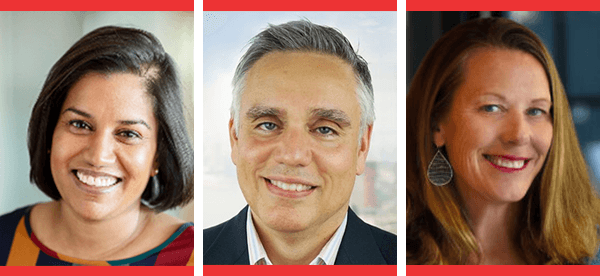
Payal Agrawal Divakaran, .406 Ventures
Steve Krupa, HealthEdge
Michelle Snyder, McKesson Ventures
Subscribe ON iTUNES

Don't miss an episode. Join the conversation by visiting our podcast channel on iTunes today and subscribe. It's fast and free!
 SUBSCRIBE ON iTUNES