Candid Conversations with Digital Health Innovators & Business Leaders
Welcome to the Breaking Health Podcast
Conversations between VCs and entrepreneurs typically occur in boardrooms or coffee shops. In the Breaking Health Podcast, you get a seat at the table. Our hosts bring their investor insight to revealing conversations with the most disruptive CEOs in healthcare. Listen to understand how these leaders are building the companies – and fostering the cultures – that will change everything.
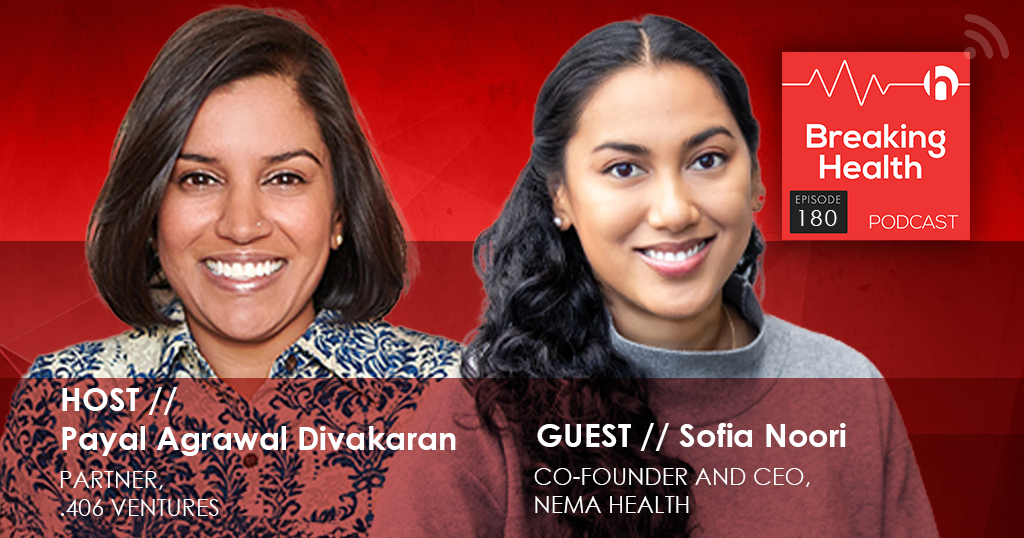
PTSD has often been associated with specific demographics for decades, which leaves millions of individuals unseen. Sofia Noori, co-founder and CEO of Nema Health, joins Breaking Health to unpack what trauma really looks like in the U.S., why sexual assault and domestic violence are among the most likely triggers, and how people often end up treated for “anxiety” or “depression” when the real driver is unresolved trauma. With host Payal Agrawal Divakaran, their conversation delves into how Nema delivers first-line, evidence-based PTSD treatment, what “dose and frequency” means for therapy, and why completion matters so much. They also discuss why payers are willing to reimburse high-quality trauma care and the story behind Nema’s partnership with Gabrielle Union.
If you care about trauma therapy and better outcomes that hold up in real life, share this with someone who needs it and leave us a rating and review.
GUEST BIO
Sofia Noori, Co-Founder and CEO, Nema Health
Dr. Sofia Noori is the co-founder and CEO of Nema Health, a venture-backed virtual clinic delivering evidence-based treatment for PTSD and trauma. A psychiatrist by training, she specializes in scaling high-quality mental health care through technology, with a focus on outcomes, access, and patient experience. Under her leadership, Nema has built a differentiated model centered on intensive, structured therapies like Cognitive Processing Therapy (CPT), achieving high remission rates and patient satisfaction.
Dr. Noori is an assistant clinical faculty member at Yale School of Medicine and serves as a perinatal psychiatrist for the Connecticut ACCESS mental health hotline, supporting clinicians statewide. She completed her psychiatry residency at Yale, where she was the department’s first chief resident of digital psychiatry and co-developed a national curriculum on digital mental health. Her work sits at the intersection of clinical rigor and company-building, with a focus on bringing gold-standard care to scale.
HOST BIO
Payal Agrawal Divakaran, Partner, .406 Ventures
Payal is a partner at .406 Ventures, where she co-leads the healthcare investing practice. .406 Ventures is a Boston-based venture capital firm with over $1.3B under management. .406’s world-class founders and digital health companies are transforming healthcare technology and care delivery. Payal leads .406’s investments in AristaMD, Diana Health, Equip, FamilyWell, Heartbeat Health, Humata Health, Nema Health, Nomad Health, OncoveryCare, Vitalize Care, and Wellist. She has also supported Better Life Partners (acquired by Groups Recover Together), Laudio (acquired by Ascend Learning), Redox, Wayspring, and WelbeHealth.
Before joining .406 in 2015, Payal co-founded a company called SpotRocket while at Harvard Business School (HBS). Prior to that, she worked at Eventbrite, Spectrum Equity, and J.P. Morgan. Payal is a member of the board of trustees of Dana Farber Cancer Institute, a venture capital advisor at HBS, an advisory board member for Boston Children’s Hospital Innovation & Digital Health Accelerator, and a mentor for MIT Sandbox. Payal received her master’s degree, with Distinction, from HBS and her bachelor’s degree in electrical engineering and minor in management from MIT. She is a Boston native and die-hard Celtics fan. She and her husband and two children live in Brookline.
TRANSCRIPT
Welcome to the Breaking Health Podcast, a series of discussions with the most disruptive CEOs and leaders in digital health.
Payal Agrawal DivakaranWelcome to the Breaking Health Podcast. I'm your guest host, Payal Agrawal Divakaran, partner at .406 Ventures. I'm joined today by Dr. Sofia Nuri, co-founder and CEO of Nema Health. Sofia, welcome.
Sofia NooriThank you, Payal. It's such a pleasure to be here.
Payal Agrawal DivakaranThis is really fun because these are topics you and I talk about all the time, and now everyone's going to get to hear it. Let's start with the company, Nema Health. For our listeners, what does Nema do? And you know, what gets you up in the morning every day?
Sofia NooriYeah, I'm happy to share. So Nema Health is a company that provides outstanding care to trauma survivors and those who have a trauma and stress-related condition. This is something that's very near and dear to my heart. So I'm a psychiatrist. I was also a rape crisis counselor in a former lifetime. Unfortunately, I have experience with trauma myself and my family were refugees from the Vietnam War. So I grew up being really passionate about how trauma affects folks and also how people do or do not find recovery. And was always also very interested in the design of healthcare, right? Like how do you actually think about the experience of it and how do you design it so that it not only leads to a better experience, but also better outcomes, right? And just better outcomes for the entire healthcare system too. And when I was in residency and in training for psychiatry, it was just so, it was so stark and clear to me that the condition, you know, where I thought there was the biggest gap between what happens in practice and what the actual practice guidelines actually say was with PTSD and with trauma. And a lot of folks think about war veterans with for PTSD, which is a population that does suffer from PTSD a lot. But what people don't realize is that the traumas that are most likely to cause PTSD in a trauma-related condition are actually rape and domestic violence. And combat trauma is actually third most likely. And so about 85% of all cases of PTSD are actually in civilians. And, you know, as a survivor myself and a former rape crisis counselor, it just really felt like we were not getting folks care and that people didn't even sometimes realize that they could even have this because they were they were really minimizing their own pain. And that just was leading like so many issues in the community. And so that ended up being like the thing that we wanted to try to solve for is like how do you get, you know, really great treatment and care to your to folks like your mom or your like a loved one or a friend after something happens to them. Um and so that was the thesis for Nema.
And you started to touch on this, which is there is this perception that PTSD is a condition for veterans. And you highlighted that it's actually number three in terms of its ranking there. I'm always amazed by when we hear the patient stories of Nema and the experience of the truck driver with an accident, the 9-11, you know, firefighter, in addition to the examples you mentioned about you know domestic violence and sexual assault. So tell us the you know, the patient population that Nema serves. What does it look like? And is it big enough to have a there there?
Yeah, great question, Payal. I mean, I like to say that we see the run of humanity through our like proverbial doors because it's just the trauma is actually so diverse. And it's almost like part of the human condition in some ways. So about 80% of all Americans have suffered what we think of as a traumatic event. So exposure to life-threatening injury or illness or witnessing it happen to someone else, right? And fortunately, you know, most people can recover from the symptoms of that, right? Um, and the aftermath of that, but about one in 10 people don't. So there's there's, you know, 20 to 3 million Americans who are suffering from PTSD. And also clinically, there, there, there's more recognition that PTSD is not an anxiety disorder. It's actually a stress-related condition. And there's now a whole category of conditions called trauma and stress-related disorders, of which PTSD is just one. And so, this is also just tracking with the research and what we know is that there actually are millions, like tens of millions of people with PTSD who don't either realize it or they're getting sometimes treatment for something else because they're not actually addressing the root cause. They think they have just like treatment-resistant depression, right? Or like really, really bad anxiety and or or something like that, because we have a stereotype that PTSD is a war veterans issue. And again, it totally is, right? There are so many vet vets with PTSD. But even for veterans, you know, the the vets who are most likely to be diagnosed with PTSD are the ones who have child sexual trauma or military sexual trauma. And so I think that just goes back to this like really interpersonal quality of trauma that is more likely to really like harm someone for life in some ways.
Payal Agrawal DivakaranYeah. And talk about the disruptive treatment that Nema provides. Cause that I've, you know, I I was amazed, you know, people think that you've got to do all these different types of treatments around it. But how do you guys approach the treatment and what does it look like?
Sofia NooriYeah, yeah. Um, so I so the the way that we approach treatment is we really want to basically do what is supposed to be done for PTSD and what we see actually moves the dial in research, but do it so well that we see the same outcomes in the community, right? And so we think about ourselves as essentially translating like the great work that's happening in PTSD treatment to folks like you and me, essentially. And so how we do that is the first thing that we did is is do an insane amount of research on what really moves the dial for PTSD, right? And then we backed into designing a care model that essentially does those treatments faithfully, but also takes into account the diversity and like the fabric of people's lives, essentially, as well. So we provide wraparound services around the treatment. And so what the care model ended up looking like is a care model that does all of the first-line treatments for PTSD with a particular focus on cognitive processing therapy, which is one of the two first-line treatments, and also provides a lot of wraparound services to essentially address the different issues that are happening with survivors because it's such a heterogeneous, you know, population. Um, we see folks who are rape survivors, right? We see child sexual abuse survivors, we see folks after who are currently in abusive relationships, right? And are fearing for their safety now. We see first responders, healthcare workers, folks with medical trauma, right, after a catastrophic injury and things like that. So we see folks after mass shootings, gun violence, natural disasters. And so as you can imagine, they have so many different needs. But what I think is really interesting and also like great about trauma therapy is that it works regardless of the number of traumas, the types of traumas, or even the time since the trauma has occurred. So we see folks a year after, a month after, 40 years later, and it still works. Um and really our goal is let's get you better as much as we possibly can and then have you enter into recovery, which is a concept that people do not think about with PTSD. They think about it with substance use, but so many survivors just really think this is a life sentence. Like this is a chronic illness. I'm gonna limp through my life forever, frankly. The best I can do is like cope with the symptoms. And so the goal with our treatment program is like, no, like we want to get you the first-line treatments first so that you can actually recover and be in recovery, not in this like chronic illness, chronic stress state. Right. And unfortunately, we basically tr don't treat PTSE. And that's why everybody thinks they have a chronic illness because they never get the treatment.
Payal Agrawal DivakaranYeah. And one or a couple of the disruptive things that you've done from my perspective as a VC and an investor was you brought this treatment into the virtual domain. So it's highly accessible and to your point, meet people where their lives are at, which is it's hard to sort of do this treatment in person all the time. So you did that. You then took a health plan-oriented approach rather than a direct-to-consumer approach and said, you know, this has got to be reimbursed and you're gonna pave that path. We're gonna get to that in a little bit. And then you took a very research-oriented approach, like you said, and a clinically evidence-based oriented approach. And those, I think those three elements are common themes across the .406 portfolio when we think about companies and particularly in mental and behavioral health. But let's talk about that evidence-based, because your clinical outcomes are striking. And give our listeners a sense of that. You know, 91% of the patients are experiencing improvements and so on just after four to six weeks. I mean, walk us through what's actually happening. What outcomes are you seeing, and what does that mean for the a patient or the system at large?
Yeah, yeah. So, we, and to to give folks a better sense of like exactly what we do, we essentially designed like an intensive program for PTSD treatment where instead of taking you know months to complete trauma therapy, folks complete it within four to six weeks because they're getting a higher dose of it. So we think about dose and frequency with meds. We don't think about it as much with therapy, but it actually has works in the same principles for PTSD treatment. And so we generally dose the treatment three, three times per week, minimum twice a week, and folks finish in four to six weeks. And that actually leads to higher completion rates, which is something that drives the outcomes. Um also people like it better a lot of the times because they don't have to live through life for like three to six months. They're getting a concentrated dose and then hopefully entering into recovery. And so we generally with our with our treatment, we're we're seeing most people complete the treatment and also the outcomes are really striking, but also like they're not it's not magic. We're seeing the outcomes that you see in the research, but the thing that we're doing that is really amazing is we're able to reproduce those outcomes in the community because we're doing the therapy so well with our fidelity and quality and training programs. And so, for treatment completers, the the about 95% of people literally lose the diagnosis of PTSD by the time that they graduate from the the clinical program. And that takes about 38 to 39 days on average. And, about 99% of treatment completers also just have a clinically significant improvement. So that threshold is is lower. It's just like you've improved. But what we really care about is the remissionslash recovery rate, how many people lose the diagnosis? Um, and so yeah, we're super proud of those outcomes. But also, I'm super proud of what that means for people's experiences, right? Like it just opens up another world. And during the last session of therapy, we asked them, now that you no longer have PTSD, what do you want to do with your life? Um, and that's something that a lot of people have never, it's it's a thought that's never struck someone, right? Uh and so it's really, it's really like inspiring and amazing to see when people recover.
Yeah. And I can hear in the back of my head people or a listener saying for an area such as PTSD, which has been so misunderstood in the public domain, they're probably thinking, okay, so what? So a patient gets a better life, gets over this trauma, but why is that a big deal? And that's where this ROI for the not only the patient, but the payers comes in. And we, you know, it's something that we think greatly about at .406 because to us that does get to the bigger, you know, picture of why this the treatment like Nema's is important to the healthcare ecosystem. So I don't think that's well appreciated. Walk us through it at, you know, to the extent you can, this math of what Nema is delivering for the health plans and why they're willing to reimburse you in a way where they won't reimburse anybody else. You paved the path for how Nema got paid. Why are they doing that?
Sofia NooriYeah, I mean, so I think beyond like the R like the ROI and quality of life improvements for the patient, you also have to remember that this is a stress-related condition, right? And so after someone experiences the trauma, they're not only under mental stress, they're under physical stress too, right? And it's chronic. And so they not only develop, you know, potential like trauma, like mental trauma symptoms, they're also trying to cope with it and their body is also in fight or flight. And so what often happens is they develop a lot of conditions where the trauma is the underlying cause, right? And that includes substance use. Like sometimes they're avoiding their trauma symptoms through substance use. They're they're more likely to be suicidal, right? Um, they're also more likely to be traumatized again and to be in unsafe situations, right? And get and get into accidents. And they develop medical conditions that are related to chronic stress. So, like high blood pressure, diabetes, autoimmune disorders, and things like that. And so that leads to a lot of cost for the payer. So these patients tend to be higher, much higher cost. Um, in some of the commercial studies that have been done, the annual direct and indirect health care costs, like total health care costs, are around like 20,000 a year. And they're higher for PTSD patients than for other types of mental health patients, including depressive patients. So we, so generally, a lot of these patients are what you would consider like seriously mentally ill sometimes or of higher acuity, right? And those are the patients that Nema is particularly positioned to treat because we have an intensive program, we provide wraparound services. This is this is like our bread and butter type of patient, right? And so this is where there's interest in from the payers. There's like alignment between what we do, you know, what their concerns are as well. And so we're able to essentially drive a lot of partnerships because of that.
Yeah. And it's one of the, you know, blessings of having a health plan partnership is that the patient, you know, doesn't have to pay fully for the treatment or doesn't have to, you know, it's covered. One of the challenges is that then, you know, you're kind of going through the the paidful health plan sales cycle and going to, you know, there's the difference between the national and the regional health plans, and you're going to each one and striking rats, educating them on your ROI. And and you have a precedent for your rate and all of that, but it's it's that's the the hard work you embark on. So for for if there's a patient trying to find Nema, I mean, what what states are are you in right now? How do they find you? You know, give folks a bit of sense of that.
Sofia NooriYeah, yeah. So we are in 15 states currently and continuing to expand.
Payal Agrawal DivakaranAnd being in a state means that you've got the kind of health plan coverage in that.
Sofia NooriYeah, we have some health, at least some health plan coverage. We have therapists licensed in that state as well. And like we are, you know, legally able to operate and see patients clinically there. And so we we typically we have a lot of the East Coast states. So our our biggest like areas of business are in the tri-state. So New York, New Jersey, Connecticut, Massachusetts, Pennsylvania. Yeah, and then also the most populous states, so like Florida, Texas, California, Illinois, too. And then we're kind of marching down the eastern seaboard, I'd say.
Payal Agrawal DivakaranWhat the listeners didn't see was that I did a fist pump when you said Massachusetts, but yeah.
Sofia NooriAnd then we have about 33 million lives under coverage right now, and are just my like my that my job as you know, Payal, is like commercial sales, is like really just trying to make sure that we continue to get coverage because there's no point in offering outstanding care if people can't actually afford it or access it. And so we want it to be available to anyone, you know, regardless of insurance type, and also go for Medicaid and Medicare, like all lines of business. It's just, you know, it takes a really long time because of how fragmented the American healthcare system is.
Yeah, but we should pause on that 33 million for a moment because you this company did not exist a few years ago, or it was in its nascency. And you've gone from that to having health plan contracts that cover 33 million lives. There's 33 million people that could come to you, get your treatment, and have it be covered. I mean, it is, I think that pace is staggering and you're falling in the footsteps of you know the equips and the in-strides of the world, but it's I think that's that's incredible. And, you know, I see with this company, you doing so many things that I often pause and say are are astonishing for the stage and scale of the business. And another one is how you've you know struck partnerships with some individuals who've been particularly or can be particularly influential. And I think Gabrielle Union is one of them. So we'll shift to that topic now. And of course, as a fan of the NBA, I, you know, an assault fan, I knew her husband. I didn't know as much about Gabrielle Union's story and her association with with trauma. And she has now become an investor, partner, an advocate of Nema. And just I think it was this week, People Magazine talked to her because she went through the Nema treatment herself. So just let's just talk all things, Gabrielle. Like, what has that the partnership done for Nema? What was it like? You know, who treated her? Was that you or a different therapist? Like, how did that go? And then just what is it like working with her? And what do you think this, you know, does for the company?
Sofia NooriYeah, great questions, Payal. And it was really exciting and thrilling to partner with her. You know, it's so funny because I, you know, in the in the very beginning, this was before we ever raised funding or anything, when I was just like sketching out the company and Isabel and I had been thinking about possible like partners one day, like celebrity partners, she was like the top of the list, like even like five years ago before we ever launched. Um, and I because I had known about her story and all of that. And, and I never actually like I wasn't sure it would ever actually happen. And then when it actually did happen, it was so it felt so serendipitous and like so right. It was so yeah, it was so cool. But yeah, I mean, she she did the Nema program. I did not treat her. She has shared public data who who did, but I but it was you know a different Nema therapist. And and you know, she's now an advisor and investor in the and the company because she just believes in it so much. But she, if folks are not, you know, familiar with her story, she's an actress and activist and author as well, who's been quite forthcoming about her sexual assault at gunpoint when she was 19. And she reaccessed Workers Comp right after, you know, she has been in therapy for for decades and never recovered. And I had known that she had never recovered. And then she she did Nema's program and actually did recover. Um, and she shared a post, and then it's been now written in the news that, you know, after 34 years, she recovered with Nema's program. Yeah. And she she shared about how that changed actually her ability to mother and like her relationship with her daughter and her marriage and and the shift that she felt was so that was really exciting to like hear the impact.
Payal Agrawal DivakaranJust on that, I saw with the you know, the people interview of her post-the treatment where she said, Look, I was living in this world, always worried for my daughter and my, you know, my children. You know, we have security in the backyard and you couldn't, and yet I was worried. And so to think of she talked about a level of freedom that she's from being on the other side of this. And so we just talked about the medical ROI to the healthcare system, but just think about the personal, you know, ROI from doing this. It's incredible to hear that.
Sofia NooriYeah, it's it's so wild. And and it was also just it's like so amazing to hear, and it's also pretty typical of what we hear from the survivors, right? And and also like her story is actually really characteristic of what we hear from from mothers who go through the program too. Like as I'm a perinatal psychiatrist as well, and we see so many cases of moms coming in because their kids are now the age that they were when they were abused, right? Or they're now worried, you know, that what happened in their lives will happen to their children. And and it totally changes it, a they're very motivated for treatment and also like the shift that they feel when they actually recover, like in the way that they're able to just live lives, is so it's the freedom is like such a good word for it. And and it's amazing for the therapist to see. We don't think about that a lot, but like the therapist experience in here is really important, and especially when you're doing trauma therapy, but being able to see people actually recover is also something you don't see in mental health very often.
Payal Agrawal DivakaranYeah. It's amazing. And I will say that it's it's often more fun to talk about a celebrity like Gabrielle, but we hear these types of stories every you know, board meeting with the patient stories, like it's over and over and over again for you know folks living, you know, their their lives. So it's it's really incredible. Yeah.
AnnouncementAre you enjoying? The conversation, we'd love to hear from you. Please subscribe to the podcast and give us a rating. It helps other people find and join the conversation. If you've got speaker or topic ideas, we'd love to hear those too. You can send them in a podcast review.
Payal Agrawal DivakaranLet's talk the funding journey because you are a venture-backed business and me .406 are proud to be partners with FEMA. But you know, let's start with your personal journey because I bet people are just, you know, dying to hear more about you because you they've heard throughout this conversation already. It's like, what can't Sofia do? You know, you're th you. And so you have lived experience with trauma. You're a clinician. You know, just let's talk about your journey and why you said I'm gonna leave all of that being a clinician or the safety net of the ivory tower that you were in to start Nema. What made you do that?
Sofia NooriYeah, I mean, I think that even as like even when I was like very young, I always knew that I was, I wanted to do something for myself at some point, like and and have like a vision. I think especially, I think being in residency actually convinced me more that that needed to happen. And I was trying to figure out how, like, I don't know how that what that trajectory would look like post-residency. Then COVID happened, right? And, you know, digital mental health was really starting to to like skyrocket, right? But it felt like a lot of what was coming out was lower acuity, was more like wellness apps and things like that, right? And not necessarily for the patients that I was seeing day in and day out. And so I think it was like a confluence of different factors. I had always been interested in innovation. My first job out of college was at a center at Stanford that designs value-based care. And I was the first hire there. And so I had a front row seat to how people really think about the design and like and also they deployed the models with payers. And so I really got to see how they designed the care model and the business model at the same time. I learned about like lean and six sigma and all of those things. And so when I came into med school, I already came in with that lens. And then a lot of this was just like up from like necessity too, and just like I, and also just being a first-gen, you know, student and physician. And I lived in San Francisco at the time.
Sofia NooriI was like at UCSF in like the most expensive city in like, you know, one of the most expensive cities in the world. And I worked the entire time through med school. And what I did is I worked at startups. So like I interned at different startups, including Weira Health when they're really small, like 20, 30 people. And I so I was like always working actually, and got to work at a bunch of different startups. And then when I went to residency, I also always worked, always like was looking at things from a different vantage point. I started a conference in residency. I just like have like intellectual ADHD and like can't just focus on one thing. And so starting a business made a lot of sense for me from that type of a vantage point. And the other thing too is like there's a lot of moral injury being in like the traditional healthcare system, you know? And I just really felt that being a psychiatry trainee too. Um, you know, it's if you have to do so many things that you know doesn't don't get a patient better, but you still have to do them because there's not that many options, right? So like being in the psyche ER and having to involuntarily hospitalize people, right? Or restraining people. It's just for me, I knew that like I wanted to be in an environment where I got to design the care and like deliver the care, right? And have some more autonomy around it because I wanted to minimize that like moral injury. Right.
Payal Agrawal DivakaranAnd it's almost like you're dealing with constantly the symptoms of the problem, but never able to fix the actual. Exactly.
Sofia NooriExactly. And so that was really important to me with Nema was like we have to treat the underlying cause. And in psychiatry, it's all it's so rare to be able to do that. Um, and so that's why it really struck me that like what we do in practice for PTSD is like not at all what we do in the guidelines for literally anyone in like any setting. And so that ended up being the thesis for for Nema. But it took a really long time to design the model. We, I mean, we spent years doing the research around, okay, like even meeting with payers, like years in advance of like contracting, so that we really understood what it was that they would value. And I think that that really thoughtful planning helped us like launch, you know, with like very successfully.
Payal Agrawal DivakaranYeah. And while you left, you know, the being a full-time clinician in a traditional setting, you still practice and you know, you know, keep one foot in, you know, is that helpful in some ways to you?
Sofia NooriOh, I think it's so helpful, but I am also the type of person, I'll like as as you know, like I can't just do one thing. Like I, you know, when I was raising the seed round, I built a house, right? And I was pregnant and gave birth during the series A fundraise, right? I'm pregnant again. And we'll probably do the same thing. And so I just, yeah. So I I'm a perinatal psychiatrist with the state of Connecticut. And then I staff the maternity hotline for it, and then I still teach on gender-based violence and I teach digital mental health at at Yale. But I think it all helps. Like it's because it's all clinical, it all like to me it all connects.
I don't know how you do it, but it's so true. It made me laugh out loud that you you just you love to be, you know, full and always have a full complement of things that you're doing at the highest stress moments, including fundraising. So yeah, we'll we'll talk about that. Let we'll go to that the fundraising journey next. But before I do that, I throw one curveball at you. Do you worry at all about, you know, AI it and you know, this all this chatter about, you know, AI being able to do mild to moderate therapy. You know, do you feel like we're in a day and age where AI is gonna evolve and be able to do the work that you all do at Nema? Or how do you think about that or answer that when you know you're provided that question?
Sofia NooriYeah, yeah. And we've we've thought about this deeply too. I mean, I think AI is a is a tool, right? And like you're gonna be able to figure out how to use tools for many different applications, right? But there's like there's there's a difference between can and should and want, right? And so I think like, do I think that there is a AI solution that could technically do trauma therapy or or help folks with PTSP recover? Probably, you know. Do people want to use it, right? And should they use it are like two other questions, right? And so I think that like there potentially are a subset of patients that would would choose to to heal in that way. I think that more patients will choose to heal with some some amount of human interaction, because if you think about trauma fundamentally, it is a violation of people's trust in humanity and in the world, right? And the way that people choose to heal is just as important as what is actually available to them. And I think that they're going to choose to heal with a human because it there's something about it that helps to restore their faith too, like doing it with a human, right? The amount of, you know, human interaction, right, the dosage of it, right, the way in which it's delivered could be different. It could be AI augmented and AI enabled, right? You know, the the sort of like admin tasks that no therapist wants to do and like all of the friction points, right, could totally be enhanced with like AI. But I still think that fundamentally most trauma survivors with PTSD want to have a human bear witness to their process, right? Because it helps them restore some faith in humanity. Um, and so that's what we're operating with is like there's tons you can AI enable. We're interested in that, but that fundamental core interaction is what some people is what people will want.
Yeah. Oh, and I've just a couple quick thoughts on that. The first is, and you alluded to this, I think all you know, tech enabled services, businesses, and healthcare are shifting towards being AI enabled, and Nema's one of them. You're using AI where it's appropriate and making things more efficient. But health plans today are not reimbursing AI or an AI therapist. I mean, maybe that day will come, but I think that's one of the other advantages. We're gonna have to see how quickly, you know, AI moves along that pathway of trust, even with the healthcare stakeholders and and where they're willing to reimburse that as well. So back to the fundraising. So you , you know, when you started this, we met you pretty early on. We were fortunate to co-lead the seed round with Optum Ventures. Yeah. And then you've raised a series A, a $15 million series A Lived by Deerfield, and then CVS Health Ventures and Aetna joined. And so when you started this, did did you just you know you were gonna raise VC capital? And then how did you know, how did you get on this journey?
Sofia NooriYeah. So no, I did not. And and I think that honestly, when any when anybody starts a business, that should not be the assumption that like you are going to raise like gobs of money from VCs. And it comes with certain expectations around growth and all of those things, right? And you'll have to be able to accept that and meet those if like you're willing to to take the funding. Um, and so we when we were starting out, we we had grant funding. So I had an APA minority fellowship that I used to help design the first website. And then I was like, hey, I'm a doctor and I can actually just open a practice and just see if people want this, right? So I was the first trauma therapist and we just bootstrapped based on, you know, essentially like a little, like a tiny solo practice. So I could see if is this something that people want, do we have outcomes? Um because it was intensive trauma therapy. That's like not something that's really done in the community, right? And then there was a point where we we actually before we raised the seed round, I was already talking to Optum. I was talking to Martin, the CMO at Optum, and there was interest in potentially a national contract if we were able to scale. And so that's when, like when we saw the outcomes and we also saw that there was appetite from the payers, that's when we were like, this could be huge, like and it could be like a national scaled model of care for survivors. And so that's when we thought about taking venture funding because we needed to to move fast to basically take advantage of this like opportunity and serve patients. And so that's when we raised the seed round with like you and in optimum and then and then since then have been just continuing to scale. Um, but it we needed to make sure that the quality was maintained at every point.
Payal Agrawal DivakaranYeah. And I loved your point that not all founders should presume that they need to or should take venture capital money. But if there are founders listening who are thinking about taking on VC money, you know, what were you looking for in in your VC partners along the way? And what what should founders be thinking about?
Sofia NooriI mean, I think the first thing is just that the founders should always be thinking about is just building a good business, right? Because it's not about what the investors think of your business. It's really about that, because if you have that, then the right investors will find you, right? And then I think the second thing is to find investors who, as you are, Payal, like are really like actually see your vision for the like in the way that you see it, right? Because if they don't, there's gonna be a misalignment between their expectations and your expectations. And so I remember when you and I met and when I met with like my my other investors, I I remember asking, why do you want to invest in you? Like what it is, what is it about this that actually makes it so special for you in terms of its mission? And that was really important to me because you don't invest in a trauma company just be for like, you know, the return. Yeah.
Payal Agrawal DivakaranYeah. And I remember that conversation distinctly and being able to share the areas of my life where I've I've witnessed it, you know, trauma of whether it was for myself or for family members and so on, and just the impact and the ripple effect that that can have, yeah, and just our shared vision that there's there is it, it's it's a problem worth solving, and and then the ripple effect impact that it can have when you treat these patients. So, you know, the vision alignment that you and I had was was so incredible to feel. And but you're doing the the hard work. So where, you know, if you had to think, you know, future for Nema, where where does it go from here?
Sofia NooriYeah. Well, I mean, I first of all, I mean, I I want to be able to take all insurances from like C to Shining C. And so I think there's a lot still to do there, right? Where like I want like 300 million Americans to have access to us, not just 33 million, right? And that that's going to be like there's just a lot of expansion there. And also trauma is not a like a it's not something that's sp like special to the US. This is a global problem, right? And also the trauma therapies actually work across cultures, across languages. So I feel like there's a lot, there's just like a lot within that. And I think the other thing that would be amazing is to hopefully get into like just adjacent populations as well, right? Because right now we only treat adults and there's so many different populations who could benefit from this. So yeah, I mean, I think there's just like a lot there. And this is why I tell folks we're not a PTSD company, we're a trauma company, because the the problem we're not we're trying to solve is not just one diagnosis.
Yeah, the future is bright for Nema, and like you said, there's lots to do. All right. Well, let's shift into our last segment here, which is the rapid fire segment. I throw out a topic, you know, you kind of say the first thing that comes to your mind, I share my thoughts, and then we go from there. So PTSD and woman, yeah, women are twice as likely to develop PTSD as men. And we talked about this stereotype that, you know, it's historically been PTSD has been a very veteran, war, war veteran-focused concept. If you could wave a wand and change one thing to help advance the recognition around PTSD and woman, what would what would you do? Where would it start?
Sofia NooriI think I'd probably start with public discourse around it because I think like sort of like the cultural conversations around PTSD are very anchored within in certain populations. And so people don't see themselves in the diagnosis or they over-identify with it in in terms of like a as a cultural term and not really like a plentiful term. Does that make sense? So I'd probably start with public discourse. And that's why I think it's so great that like Gabrielle Union and other people are starting to speak about recovery.
Payal Agrawal DivakaranYeah. It's, you know, for me, I've often found I spend a lot of time in women's health. And sometimes the best way to advance the conversation around women's health is to talk about how it impacts both women and men. But so just to shift away from the war veterans, but talk about trauma and the general population. And so I think if we can make that just more principle, right? It will advance the cause. Okay, so the peer mentor model, you have as we didn't get to talk about the care team that Nema oh yeah, but you have, you know, this peer mentor model concept. Should every behavioral health company be utilizing that? What are your thoughts on the peer? No.
Sofia NooriI don't think so. And I think that, and the reason why is because a lot of people think that adding more services equals better outcomes. That's actually not true. You can actually add more services, and that could lead to worse outcomes for your population. And this has actually been shown in PTSD patients to occur. And so I think it's actually really important that you're providing what is actually effective and not just adding stuff because it sounds like it could help. We know for for PTSD it does help, right? And that's why we offer it. But I don't think it necessarily needs to be something that's like a requirement for like every single condition in every population. Yeah.
Payal Agrawal DivakaranSo you're a physician founder. We talked about that. What's an I were I I we invest in a number of physician founders. You know, when you think about your experience, what's been the biggest blind spot you've had to work on overcoming if having been a physician?
Sofia NooriYeah. So I guess just when I think about this, I was thinking about like the biggest misconception. And then I was like, wait, no, the question is the biggest blind spot. The question can be whatever you want it to be.
Payal Agrawal DivakaranHow about that?
Sofia NooriI think the like so I think a misconception that I had about myself too was and and that people have around physician founders is that they can't operate or they they can't be effective at like actually operating a business. And so I think I also discounted my ability actually to do that in some ways. But I think physician founders are actually really scrappy because you literally have to do everything ever, like during residency. Like there's no job too small or too big. Um and I think that attitude is actually great for early stage operations. Yeah. But in terms of a blind spot, I think like the biggest blind spot I've had is just like building teams because they don't teach that in residencies.
Payal Agrawal DivakaranYeah. And then physician founder or not, that is the hardest thing about you know, building these startup companies. Yeah. You know, being having worked with so many physician founders, being married to a physician, you know, I think that one of the interesting things that I've seen is physicians are so driven and there's to be successful, and there's constant, usually validation of whether you're succeeding or not in the traditional framework. And so when you hit these points, which are inevitable and will happen to you constantly in the startup lens where things aren't going as you expect, or you hit points of quote, failure, you know, that that's when the the real entrepreneur, physician entrepreneurs are decided or or weeded out because those who can deal with that when they've not necessarily had to before, it's a new, it's another new muscle, like you said, on the team hiring. But, you have certainly been one that's that's been able to thanks, Payal. So last question what's .406 portfolio company besides Nema are you most excited about?
Sofia NooriOh, I mean, there's so many .406 companies that I'm excited about. So I I yeah, I'll give you a couple. I mean, I'm really excited about Family Well, and you know, as a perinatal psychiatrist myself, right? Like the maternal mental health model that Family Well has, I think is like amazing. And I there's it's so people are so afraid to touch pregnant women, period. Um, and it's and they're so freaked out, including even like traditional mental health providers. And so I think what they're doing is like great, like in terms of like a sort of wraparound collaborative care model. And then the other one is Uncovery Care. It like another really complex population that honestly like folks don't spend enough time thinking about their mental health is with cancer survivors. And with the amount of folks, like folks getting early detection with the increasing number of young people getting cancer and then surviving for long periods of time. I mean, it's such an underserved area. So I think those are both like amazing comedies.
Payal Agrawal DivakaranThank you. And we had Jess at Family Well on the podcast previously, so you can check out that conversation and Hill at Uncovery is on my list. So stay tuned for that. But I did have actually one final question. You talked about becoming a mom during this journey. You're gonna be once again. Has that how has that been? And or has that changed your perspective on anything that you're doing with Nemo? Yeah.
Sofia NooriYou know, like I think that childbirth was easier than building a company.
Payal Agrawal DivakaranYep.
Sofia NooriAnd so to me, your words have not been said, yeah. The mothering part has actually been easier and it's like such a joy. But I think it it, I mean, it just like makes that time away from your family. Like it it it, I mean, I I know that I'm doing the right thing because the time away from my family is so meaningful that I'm willing to spend the time away from my family. And so I think it's been for me, because I, as you know, like just do a bunch of things at the same time, it's actually been quite balancing. But I also have like a really supportive husband and and family. So that that's been like a serious privilege.
Well, you're doing all the things, and I'm so excited for the journey ahead for Nema. If folks are interested in finding Nema and getting help, it's Nema-E-M-Ahealth.com. And Sofia, thank you for taking the time to speak with me today and for our listeners to hear your journey. This was sofa. Thank you so much, Payal, for having me. Really appreciate it.
Do You Have
A STORY TO TELL?

If you’d like to be considered as a guest on a future episode of the Breaking Health podcast, please complete the application today.
Meet Our Hosts
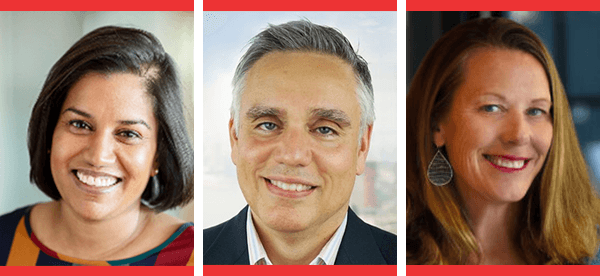
Payal Agrawal Divakaran, .406 Ventures
Steve Krupa, HealthEdge
Michelle Snyder, McKesson Ventures
Subscribe ON iTUNES

Don't miss an episode. Join the conversation by visiting our podcast channel on iTunes today and subscribe. It's fast and free!

 SUBSCRIBE ON iTUNES