Candid Conversations with Digital Health Innovators & Business Leaders
Welcome to the Breaking Health Podcast
Conversations between VCs and entrepreneurs typically occur in boardrooms or coffee shops. In the Breaking Health Podcast, you get a seat at the table. Our hosts bring their investor insight to revealing conversations with the most disruptive CEOs in healthcare. Listen to understand how these leaders are building the companies – and fostering the cultures – that will change everything.
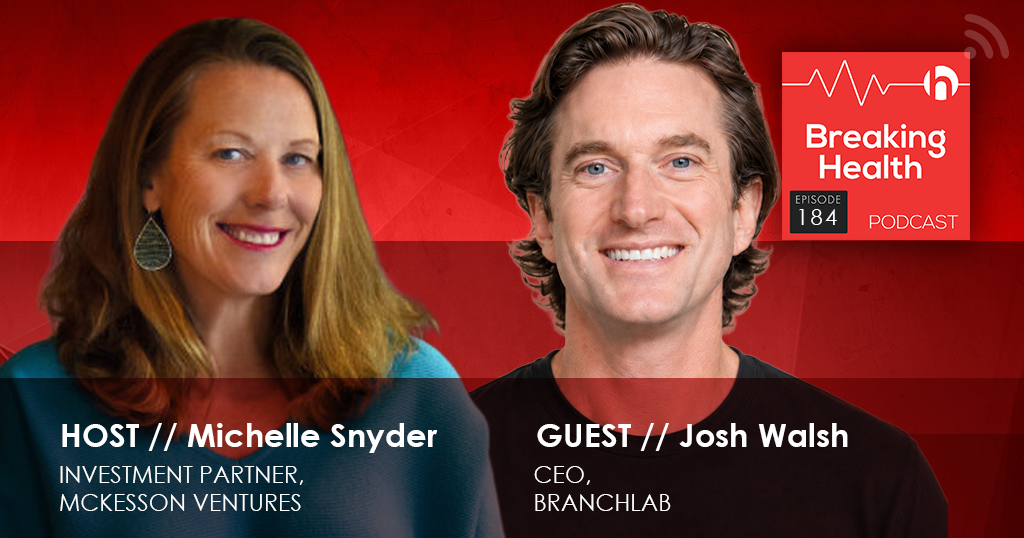
Pharma marketing still runs on phone calls, emails, and PDFs more than most people realize, and that lag is getting painful as the industry shifts from blockbuster drugs to specialty and rare disease therapies. On this month's Breaking Health podcast, Michelle Snyder, McKesson Ventures, sits down with Josh Walsh, co-founder and CEO of Branch Lab, to unpack what changes when cohort discovery and audience design move from months of offline work to minutes of guided interaction with an AI agent.
The two talk through Branch Lab’s semantic activation platform and the real problem it targets: identifying patient, physician, and caregiver cohorts using regulated healthcare data without exposing that data to end users. Josh explains how “ask the agent” replaces the old back-and-forth between marketers and data scientists, and why the second step matters just as much as the first: activation. Once you understand the clinical and demographic definition of the right audience, you need to deploy it quickly across media partners and keep improving it through fast optimization, even if formal measurement and ROI reporting lag behind.
If you care about digital health, pharmatech, AI in pharma marketing, and the future of commercialization, subscribe, share this conversation with a colleague, and leave a review with the topics you want us to cover next.
Conversations between VCs and entrepreneurs typically occur in boardrooms or coffee shops. In the Breaking Health Podcast, you get a seat at the table. Our hosts bring their industry expertise and insight to revealing conversations with the most disruptive CEOs in healthcare. Listen to understand how these leaders are building the companies—and fostering the cultures—that will change everything.
GUEST BIO
Josh Walsh, Co-Founder & CEO, BranchLab
Josh Walsh is Co-Founder and Chief Executive Officer of BranchLab, the company behind Pathwai™, the first Semantic Activation Platform for healthcare commercialization. He leads the organization’s strategic and product vision, focused on helping healthcare organizations turn complex health, commercial, and demographic data into governed audience intelligence.
Prior to BranchLab, Josh co-founded AdTheorent, building the company from startup through its initial public offering in 2021. Throughout his career, he has focused on applying artificial intelligence to complex commercial challenges at enterprise scale.
He founded BranchLab to modernize the intelligence behind healthcare commercialization, helping pharmaceutical and life sciences organizations make better decisions that connect patients, providers, and caregivers with life-improving therapies and resources.
Josh lives in Boulder, Colorado, with his wife and two children and enjoys, cycling, climbing and skiing in the Rocky Mountains.
HOST BIO
Michelle Snyder, Investment Partner, McKesson Ventures
Michelle is a partner at McKesson Ventures. The firm invests in venture and growth stage companies that build innovative software and tech-enabled services businesses for the healthcare and pharma industries. The Ventures team has deep healthcare investing and operating experience and brings the expertise and connections of McKesson, one of the largest healthcare companies in the world, to help portfolio companies succeed. Michelle's investments include Atropos Health, Midi Health, RxVantage, Galileo, Lumata Health, and CancerIQ. Before joining McKesson Ventures, Michelle spent over 20 years helping build digital health companies in chief marketing officer and GM roles, including building Epocrates into one of the most beloved physician technology products. Prior to McKesson, she worked in other operating, investing and consulting roles at Welltok, InterWest Partners, the Lewin Group, and the Wilkerson Group. Michelle received her master's degree from Kellogg School of Management and her bachelor's degree from Carleton College. While she will always be a cheesehead from Wisconsin at heart, she calls the Bay Area home and enjoys hiking, paddleboarding, and traveling the globe finding new adventures with her husband and son.
TRANSCRIPT
Welcome to the Breaking Health Podcast, a series of discussions with the most important CEOs and leaders in digital health.
Michelle SnyderHi, everybody. Michelle Snyder, partner of McKesson Ventures and co-host of the Breaking Health Podcast. Really excited to be here today with Josh Walsh, the co-founder and CEO of Branch Lab and one of our McKesson Ventures portfolio CEOs as my guest today. So the pharmatech sector for our team has been a big area of focus for many years. And it's been really fascinating to see how the industry has been evolving, and especially the shift from the old blockbuster model where you're targeting large patient populations with a more simple message to this new specialty rare disease world where it's more about targeting smaller patient populations that have higher drug costs. And the focus is really more about finding patients and helping them through their journey versus just getting a prescription written. This evolution has massive implications for how commercial teams market their products and interact with patients. And I couldn't think of a better person to have this discussion with than Josh, given what he's been doing at BranchLab. So with that, Josh, welcome to the show.
Josh WalshThank you, Michelle. I'm excited to be here and speak with you.
Michelle SnyderAll right.
So before we dig in more specifically on BranchLab, I want to take a step back and talk about your journey to founding the company. And I'm guessing from one of the things you told me before, it's not a coincidence, given your unique background in both marketing and computer science, that you are where you are today.
Josh WalshYeah. So if we want to go back that far, we're we're we're like beyond 20 years back. But yeah, I went to uh, you know, in my undergrad, I studied both marketing and computer science. And largely influenced by a professor at that time who's still a friend of mine who, you know, correctly was estimating that marketing would be more would involve computer science to a larger degree than it was, you know, 25 years ago. And and it's been exciting ever since to like see the explosion of like digital advertising and uh sort of ride that whole thing out. Originally I found my way in more search marketing and then founded uh the first mobile DSP, a company called Ad Theorent in 2011, which had a very large customer base that was pharma, and kind of leads me to where I am today, you know, recognizing that a DSP did a great job taking offline media buying and putting it in a software. But no matter how much my pharma customers would use that software, largely everything before and after they would use that software was still offline. And so that's the you know, the the basic thesis of branch lab is you know, can we use the tools that are available to us today, you know, which are largely very different than they were just a few years ago, to enable that largely offline commercialization workflow to become
online.
Michelle SnyderOkay. So let's dig in a little bit more on BranchLab. I know in other podcasts I've heard you talk about, and on the website you talk about a semantic activation platform. So for the audience, I'd love for you to describe a little bit more what that is, what's the problem you solve for pharma, and why is it important?
Josh WalshYeah, so one main problem that we need to solve for is how pharma marketers identify patient cohorts, physician cohorts, caregiver cohorts. That process is largely offline, takes a lot of time, uh many months, costs a lot of money. And it's really handled by human data scientists who are mining a lot of times regulated data in order to answer the question of like, who should I message to for a given treatment that I have? It seems like a simple question. It's it can be quite complicated at times. And so what we wanted to bring to market, what we you know theorized could be possible going back a couple of years now, is what largely is called a semantic activation platform, which is a way to for a human to communicate with a model that was trained on regulated data and make that data uh action actionable in one way or another. So for us, that is a given pharma manufacturer, and that could be a data scientist out of pharma manufacturer, it could be a marketer as well. Uh different different manufacturers operate in different ways. But a human is talking to an agent in a platform in our semantic activation platform, and largely they're asking the the agent, you know, who would be the best fit if I wanted to promote switching behaviors from this therapy to that therapy? Or who should I message to, you know, who's likely to become diagnosed with a given, you know, disease state or something like that. And in speaking to the agent, which is then communicating with a model architecture that we built, trained on all that regulated data, organizing it in this way means the human nor the agent uh ever get access to that regulated data. And largely it's it's kind of a similar workflow that's existed for 10 or 20 years, which is say pharma marketer talks to a data scientist who then mines that data, that regulated data, and comes back with an intelligent answer. Now, if you wanted to ask a question and then a follow-up question and a follow-up question and a follow-up question, that offline process might take three, six, in some cases, nine months. With an SAP, that should take, you know, three, four, five, six minutes to come to an answer. And the important second step in the process is to take action from that answer. So in our case, in BranchLab's case, we designed an SAP that gets you those intelligent answers quite quickly, but then also you can activate against them in a matter of minutes afterwards. So, you know, we we we first want to explore what, say, patient population would be the best message to for a given indication to increase our X lift. Like, say that's my question. We, as a human, learn what the pop what the ideal uh population would be by clinical definition, by demographic definition. And then we can also create an audience file from that, and we can ship that audience file to any of our media distributions. So, you know, if we want to ship it to this TV partner or this DSP or that social media platform, uh so we can make action from it immediately. So that's that's kind of the whole platform
and in.
Michelle SnyderAnd who buys this within pharma? And and to what degree are you working with agencies versus the brand teams?
Josh WalshYep. In most cases, there's an agency involved. Some pharma manufacturers don't work with a media agency. Um, so there's a few cases where they in-house everything. In most cases, I would say pharma manufacturers want to better control these audience designs and more importantly, become more intelligent about what they are and why they work. And so, largely, in most cases, a pharma marketer is using our platform to better understand populations that they want to message to and why. And then in the platform, they can invite their, say, media agency to pick up those resulting audience files and distribute them to the media buys that an agency typically handles. So it's a bit of both.
Yeah.
Michelle SnyderOkay. And so it sounds like there's a time savings on the front end, right? You're going from months to days, which is incredible. And then what about on the back end in terms of the measurement? Because I've often heard this is a challenge in the industry, right? Is you often don't get the results back for a month or so. And at that point, it's kind of too late to make changes.
Josh WalshYeah. Or I think there's like I think there's a few, like there's probably a few issues with the status quo, in my opinion. One is it takes much too long. Two is I think we could do, as an industry, we could do a much better job measuring something closer to ROI. Ultimately, ultimately, that that is the bottom line here. So the industry ends up measuring a number of items that are that could be leading indicators of ROI. Uh, but I think there's probably a more direct path that we could take. The way we handle it is brain swap is not in the the business of providing measurement. But what we do is we perform quite a bit of autonomous and human-in-the-loop optimization in as uh in as little as 24 hours in some cases. So with anything that gets deployed, we want to make sure and see that live and then distill actions that humans are taking as a result of those efforts. And sometimes that's you know, you can autonomously change, for example, an audience design or a list of NPIs that you're communicating with, for example. Other types of recommendations need a human in the loop. So though we are not, you know, providing measurement, nor do we want to be, I think there's a lot we can do from an optimization standpoint so that when that measurement report is delivered, say on the six-month mark, you're not surprised by it. You've been making incremental improvements throughout that lifetime. And also, and and and more importantly, learning. Like the central part of the thesis underpinning all of this is our customers should understand why they're getting the performance that they're getting. Um, I like to say my customers that log into our platform are the best audience strategists in the world for their brands. And my team shouldn't be, uh, nor should any offline, say, audience vendor be the best audience strategist for your brand. So a lot of this is education as well, and just kind of like leveling up all of our customers so they're not required to rent that intelligence from an offline vendor.
Michelle SnyderGot it. I mean, it sounds like this is some a pretty dramatic departure from how things are done today.
Josh WalshYes.
Michelle SnyderAnd, you know, as an investor, I've often thought about, you know, we see a lot of companies with great technologies, but I think people underestimate both founders and investors, how much change management might be required to get technologies both adopted and loved by the customer. So, how do you think about change management given given this departure from how things are done today? And what do you how do you work with the pharma teams to kind of bring them along on that journey?
Yeah, it's a really fun moment in time, I would say. I took one day off from my last startup to this one. And part of that was the last company I founded, which had a great outcome and it was like well on its own. You know, we we IPO'd that business and it was it was doing fine. And but I mentioned before, a lot of our customers were pharma. And so I sort of got a front row seat with a lot of these companies. And leading up to BranchLab, there was just this feeling of like, it's amazing that we're still doing this offline. It's amazing that this still takes, you know, six months, 12 months to get something, you know, into market. And so the market was like aware that this was a problem and how different it was for other verticals. If we were advertising a car, let's say, it was so much more sophisticated. So there was the the market understood that we could do better. And then also we have this other tailwind, which is like pharma commercialization largely, with the exception of Viva, let's say, like largely missed the SaaS cycle. You know, like like the famous Andreessen quote, you know, software will eat the world. Of course, Mark was right. But for some reason, that didn't happen in pharma commercialization. It's still offline. So you would think that that might be a headwind. Oh man, we got to catch them up through SaaS and then get them to a genetic workflow. But actually, it's a great benefit because the human behavior that we're changing is stop talking to humans, start talking to agents, and the work and like the experience is largely the same. It's just agents are far quicker and they put up way better performance than a human can. And so, and behind the push behind this whole thing is all these people also like leave their office and go home and pick up, you know, a chat GPT or a Gemini and ask it to do all kinds of different things. And so it's like the human behavior towards a more agentic experience is just evolving organically, like in the world, maybe not organically, but largely we're we're becoming really comfortable with these different types of experiences, and we recognize that they're way better. And so I think it would probably be harder for us to go in and try to say, hey, use this sort of, you know, SaaS-like software and you're gonna have to learn it and it's gonna take you a couple of months and you're gonna click a lot of boxes and yada yada. I think that would be really challenging. We're just kind of at a different moment where it's like, oh yeah, like every time you think you want to call a salesperson at BranchLab and ask them a question or ask them to do something for you, just ask the agent. Because if you call somebody over here, we're just gonna ask the agent on your behalf anyway. And so the behaviors change has been not as slow as it has been, I would say. Not to say that it's overnight either, right? Like there's there's the right type of person who wants to embrace this, who wants to learn, you know, how this all works and how they can become better and how they can become more knowledgeable. Again, you know, our our champions are folks that write that, you know, will say, I want to be the best audience strategist in the world for my brands. Uh, but not everyone says that. You know, some people say, Oh, just you know, I'll call up Tom and Tom does that for me. And so, you know, it's not perfect. But I do think we have probably more tailwinds than we would have had, you know, call it even just two years ago.
Michelle SnyderYeah. Josh, you're actually making me feel better about being in this industry for so long and you know, bemoaning the fact that healthcare was such a laggard and software adoption. So maybe it's better. Maybe we've leave log.
Josh WalshI think I mean, I will say this like the the the problems that we get to work on, you know, which is which is to say, like building a semantic activation platform is is a large and you know, it's a it's a it's a hard problem to solve for. Other industries don't require that. So by some measure measures, pharma is actually using more sophisticated tech now than its peers, at least in the you know, commercialization, marketing, advertising space. And that's kind of fun. Let's think of it through that. Like, yeah.
So one of the things you mentioned earlier was AdTheorent. You kind of passed over that quickly, but I'm gonna come back to it because that was a successful company, you had a successful exit, you're a second time founder, and I often get questions from entrepreneurs about, you know, what can you tell me some of the lessons other people have learned so I don't make those same mistakes? So given that you're a second-time founder, are there some lessons you learned from the first time around that you've now applied to BranchLab? And then maybe conversely, are there things that are different that you didn't anticipate that you didn't run into building at Darren?
Josh WalshYeah. Um sorry, I think I was 13 years of my life. Um I founded that company when I was 24 and probably made too many mistakes. Like then, you know, we we don't have enough time to review them all and all the lessons learned, I think. If I'm being honest.
Michelle SnyderWe could do the greatest hits of Joe Wash mistakes at it.
Josh WalshYeah, yeah, yeah. I think number one is for for me at least was you know, as a founder, no nobody's going to care more than you. And Ad Theorent was a little bit of a rocket ship, like pretty quickly. We were able to grow that business really fast. And and because of that, you get a lot of interest, you know, from interesting people and you know, people with impressive backgrounds, maybe. And I would say it's really important to as a founder to trust what you want to do. And it's easy to get a lot of influence from others that want to join the thing that you started, because it's easier to join that thing than it is to start that thing. I do think it's quite different though. Like, like if we go back to 2011 when I founded that company, like I don't think founder friendly was even a term back then. So just things were just different versus you know, the way the I think largely the world understands that like founder-led companies are whatever percent more likely to be successful than not. But so maybe, maybe I like, you know, you know, as a founder, you have a responsibility to sort of trust yourself a bit more without letting that you know turn into some type of God complex, which can also happen.
Michelle SnyderWhat about the people you surround yourself with? Any kind of lessons learned, the type of maybe people you hired, what makes a good team?
Josh WalshYeah, I think I think culture matters way more than I realized first go-around. And being intentional about that matters quite a bit. You know, you want to hire smart people, motivated people. You also just want to work with people that are gonna be in the trenches with you. And, you know, I think all of that is definitely true, but it's also mapping out like what do what is going to be the most productive culture for this company and being intentional and like sitting down and having conversation about that. And where are we and where do we want to be type of thing? We probably could have done better at that. Like we had a fantastic culture at AdTheorent, but it was, I think we got lucky. I think we hired good people and it was we all worked well together and we built a big business together. But you could also see how that could have gone a different direction, and so being more intentional about second time has been hugely productive, I would say.
Michelle SnyderGot it. Anything you you didn't encounter in your past company that you have to do.
Oh, the world is just the the world is just so different. So different now. Like the way we build now, the speed at which you have to ship, it's both incredibly exciting and way more stressful. Like the speed at which you need to build and ship is is you know, is like like it's almost like you can't you might not even want to have like a release, like a structured release schedule anymore. It's just like build and release and build and release, and whatever comes out, get it out. And it's at first to me it felt chaotic, and now it feels fluid, like in a really cool way.
Michelle SnyderIt'd probably be hard to go back and give it the old way.
Josh WalshImpossible. Like it would the old structured slower way, it it gives you like a better sense of control over everything, and it's more, but it but in reality, that's just not the speed or cadence or like fluidity in which we build these days. And it's kind of awesome, and like it's really fun and really exciting, and things happen so quickly. And it's also means you have to make good decisions way quicker than you had to in the past with way less information. So it's also really stressful. And at the end of the day, like, you know, everything is on me, you know, to make those decisions with limited information and to make them hyper quickly. And so it sort of requires, you know, a good intuition and trust of that, and like staying focused on mission and and being intentional about all these things. So yeah, it's it's just a different world. Like starting a company today is both easier and also like way harder at the same time, just for different, different reasons.
Michelle SnyderYeah, no, that's that's interesting to think about.
Are you enjoying the conversation? We'd love to hear from you. Please subscribe to the podcast and give us a rating. It helps other people find and join the conversation. If you've got speaker or topic ideas, we'd love to hear those too. You can send them in a podcast review.
I want to go back to in my intro, I talked about kind of this shift in the pharma industry, especially in marketing, from thinking about, you know, broad reach and getting out kind of a simple branded message to a lot of people to this new world where it's about, you know, how do you find the right patients? How do you get them through the patient journey? And I think I've actually heard someone on your team talk about this, right? It's really more about precision marketing, right? And not mass marketing. So I would love to hear a little bit more about your thoughts on this shift and the degree to which branch lab supports this new reality for pharma teams and why that's important.
Josh WalshYeah, yeah. Yeah, you're you're thinking of a paper that was written by a woman named Kat Drake, who works here. That that's a few years ago. She I I think I think the title of it was something like precision medicine will require precision awareness. And and what she means by that is what you're describing, which is like more and more we're kind of moving more towards precision medicine and not necessarily these kind of like, you know, service half the country type of therapies. The good news is the market has largely adopted her thinking. And I think, you know, other companies have sort of adopted like similar ways to say that same sentence, which is a good thing. At BranchLab, it's been our focus the whole time, like knowing that that's where this is going and where we could have the largest impact on efficacy. I would say, you know, the the the platform as it exists today, like a given say pharma marketer will go in and build something out and deploy it from an efficacy standpoint, which could be Rx lift, or there's some leading indicator things called like audience quality and some other kind of like easier, more simple metrics to look at. You know, branch apps usually top of the stack in terms of efficacy. When we go in To say specialty, rare, and into precision, smaller patient population size is much more complicated to do that job well. That's where branch lab is you know 10x better than the next offline vendor. And that's where we want to be. That's the future as we see it. I think it's you know, it's like really exciting for like everyday consumers. Like I'm a patient myself. And and of course, we all sort of look forward to that world that appears to be rapidly, you know, coming our way. Another interesting, you know, part of that to think about is, you know, there was a time where like a biotech company could get a therapy through the FDA and they would be, you know, purchased and before they even bring it to market. Like if you do the, you know, on average 10-year cycle, get it through the FDA and some big pharma manufacturer picks you up. That's not necessarily the way that things are going as much today, meaning a lot more those smaller biotech, biopharma companies are required to prove that they can commercialize that therapy before there's interest in act in acquiring them. And so that's all you know, big opportunity for a company like BranchLab as well, especially where you know the system just works so well for those types of indications. And I see the world moving more and more in that direction.
Michelle SnyderAnd then so on that theme, because I know you think a lot about the future and where the industry's going.
I love the earlier discussion about how pharma's kind of leapfrogged and is actually more engaged than many other industries. Where do you think we go from here? What do you think the pharma marketing team of the future looks like? Either team composition, the tools they use.
Josh WalshYeah, I think I I would say the the very fast adoption of the branch lab platform is quite encouraging. We began to commercialize this the platform at the beginning of this year, actually. It took us a couple of years to build out the SAP, and and we've made like I'm very proud of the team here and what we've been able to accomplish in terms of bringing that to market. And so right now, as of this year, like pharma manufacturers like have the they have a view into what these new workflows could look like. And already some of them, it's kind of like the higher up the totem pole you go, but like if you get to the chief officer level, they're already beginning to think about like they see the system, like they know their team is working with it, they want to have a conversation with us, a bigger conversation. And quickly, you know, at least a couple of them are recognizing, like, oh, could we handle this through like an MCP server? And at least one top 10 pharma manufacturer, chief officer, and I have had conversations about like, is anyone at that company going to log into any third-party software five years from now? Or are they going to go to an agent that's communicating with BranchLab and communicating with other services via MCP server only? I tend to think that that is the direction that we're headed. Do we get there in three years? Do we get there in five years? Do we get there in eight? I don't know. But the ease of operating in that way and the efficacy that we will get as a result of that, I see no way that that doesn't happen. And that to me is also really exciting because we're this super cycle that we're in, you know, it's almost like the the next cycle might just be two or three years out. And that's the that speed of change is again radically exciting and somewhat stressful. But what a what a cool time to to live and to and to be a part of and to be a part of all this. So I think it's possible. I don't know the time frame. I'll call it five years to probably be safe. I tend to be a little bit more optimistic. I think it's very likely that you know a team across commercialization, or at least in marketing, is probably talking with an agent that the manufacturer you know licenses but kind of owns a bespoke version. And that agent is performing everything that human needs them to do, which would include, you know, which patient populations should I message to? That'll give me the best ROI. Same with HTTP Caregiver. Okay, build those things out, teach me why you did those things, make me more intelligent, measure the outcome of my efforts, tell me how to get better. It's it's wild to think that before January of this year, when we launched our platform, all of that was offline phone calls, emails, PDFs. BranchLab now has a platform in market where you know a healthy portion of top 20 pharma use this platform to perform those functions. And possibly in we'll call it five years, you know, my platform is more headless and they're communicating with an agent that's getting what it needs from my service to answer all those questions. I think there's no chance that we don't get to that point. I think it's a matter of, you know, is it three or five or eight years? Yeah.
Michelle SnyderSo it's not will we, but when?
Josh WalshI just don't see why we wouldn't. Like it's like my whole our whole platform is wrapped in an MCP server today. So I I already have, you know, people that work at BranchLab, and they're like, oh, my preferred method of interacting with our platform is just using ChatGPT because that's the agent that I use for my personal, and that's the one I use for these work tasks. And you can permission everything through that. And so for them, it's like they're just it's it's just easier, it's more comfortable, and that's fine. And some people use Claude and some people use Gemini and and others, you know. So I think that's not like a pharma, you know, marketing. I don't think it's pharma manufacturing. I think it's like businesses will operate in that way. And so, yeah, it's just an exciting moment where like, you know, the lane that we're in, pharma commercialization, was completely offline, you know, less than or call it 12 months ago. Now has been brought online, and we have a bunch of interested and curious and rapidly becoming hyper-intelligent users that, you know, before just picked up the phone call, picked up a phone to make a call or sent out, you know, a PowerPoint to get something done, but they didn't really understand how it was getting done or why it worked or why it didn't work. And those people are like rapidly being leveled up. And in a few years, if those people have the ability to perform all that and to learn all that through an agent of their choice, they're going to do that. And those are going to be the leaders of these companies. So I see no way that we don't get there. And I'm just I'm really excited about it. I think it's gonna be a I think it's gonna be a way more efficient way of operating. And I think we can do a lot of good in a world by taking all this slow, offline, less effective means and and and you know, catching it up to to where we are in in 2000 27 almost.
Michelle SnyderI mean, I do not think you are alone in your enthusiasm for this space here. And that kind of brings me to my next
question. So we did a survey this summer at McKesson Ventures where we interview or surveyed a hundred both healthcare investors that were interested in pharmatech and entrepreneurs just to get a better perspective on their thoughts on the pharmatech space. And so this can be more rapid fire, but would love to get your thoughts on whether you agree or disagree with some of the responses. So on the investor side, it was really interesting. About 60% of the investors said they were much more interested in investing in the pharmatech space versus three years ago for a couple of reasons. They had the view that pharma actually had greater interest versus other industries in healthcare in adopting AI, they had larger budgets, and there were actually more opportunities to displace legacy solutions. So just curious, do you kind of think investors are on the right track or disagree?
Josh WalshI'm surprised. I'm surprised there's only 60%. Like for me, it's like yes, yes, yes. 60% seems quite low. I'd be more curious to that they're more interested than three years ago.
Michelle SnyderThey were interested in pharmaceutic and now they're even more interested.
Josh WalshFor me, it's yes, yes, yes. I'd be curious to talk to the 40%. Like, what are they, what are they, what are they seeing that I'm not seeing, or what are they missing? I don't know. Yeah, I would definitely agree.
Michelle SnyderOkay. So then the other side with the entrepreneurs. So about half of them, many of them said selling was about the same, but about half said selling into pharma has gotten easier over the past couple of years. And the main reasons they listed were that senior leaders were pushing to adopt new technology faster. There was more interest in adopting AI, and pharma was moving more quickly from doing pilots to just going into production. So love to see if you would agree with that. You're seeing that as well.
Josh WalshI would say yes, there is way more interest. There's also mandates that are coming down. So that all is quite helpful. I would say procurement maybe hasn't caught up with that yet. Like a lot of procurement paperwork that we get, and a lot of the companies we work with are like international companies. So procurement is like broken up between like France and Spain and the US. And so it's that process can be can feel like really slow. And even some of the paperwork, it's like you kind of look at the paperwork and you're like, oh, this was like written before computers existed. You know. And so I would say, you know, the people in procurement like recognize that the company is trying to move quicker. And so the people are are trying to do the best job they can, but they have their checklist, and and I have no idea where that comes from, probably you know, from a good place or some lawyer somewhere who was making a good case for it anyway. And so I think I would say easier meaning, like my customers see the future, they want to be a part of that future. So there's way more enthusiasm. Easier, maybe not easier because you still have to go through the same procurement channels, yeah, which are maybe not yet like adopted to today's standards yet.
Michelle SnyderGot it.
All right. My last question here. It's really hard to build build a big company in healthcare. Josh, what keeps you up at night?
Josh WalshA lot of things keep me up at night. Well what one thing I would say that keeps me up at night is a lot a lot of like a successful execution at BranchLab means that we get people in need of a treatment on said treatment. So a lot of like efficacy that we look at is actually based on health outcomes. Like, are we, you know, we sort of have two missions of a company. One is you have this clunky, offline, inefficient workflow that must be, you know, corrected. And as technicians, like we just see it and we're like, we just want to fix that. So that's like part one. And there's a ton of opportunity in doing that, and the TAM is is enormous. The other side is, and there's good academic empirical research to support this, and we want to produce our own, is that when we do the, when we increase efficacy on the commercialization side, you empirically improve health outcomes for people in the United States. So one thing that keeps me awake is I want to move a hundred times quicker some days. And and sometimes that means, you know, we're missing helping people that we could be helping. And that's tough, especially if it's procurement drags something out for an extra month or you know, you know, say a specialty, you know, cancer treatment, let's say. And you know that we we know empirically that we can get those people to talk to their doctors and get them on life-saving treatment, but I'm stuck in procurement for a month or two months, and that is really uncomfortable, right? Um, the other thing is just it's it's the mission is enormous. Like the TAM here is is it is very, very big. And and and because all this is offline and because the vendors that operate offline sort of don't want to be transparent, right? Like if you're renting intelligence from somebody, they can't give it to you. It's just sort of a complex web that we need to pull apart in order to make a streamline efficient program. And, you know, like anyone trying to solve a complex problem, like you know, sometimes you're just like, this is so big, this is really hard. And but but largely it's like, and if we fail, you know, there's so much good that we could be doing and we wouldn't be able to do that. So I don't know. That's got that's sort of like maybe a messy answer, but no, it's great.
Michelle SnyderI mean, I I would say uh we all are frustrated by the pace, have been frustrated by the pace of change in healthcare, but to your point, you started this company earlier this year. You are moving quickly, and I'm I'm pretty confident that you'll be continuing towards your goal of trying to improve health outcomes for people. So with that, thank you so much for joining, Josh. I really appreciate it and loved having this conversation.
Josh WalshLikewise. Thank you for having
me.
Michelle SnyderAnd thanks to everybody out there listening and for tuning into this episode of the podcast. We look forward to bringing you another great conversation next month. Thank you.
Do You Have
A STORY TO TELL?

If you’d like to be considered as a guest on a future episode of the Breaking Health podcast, please complete the application today.
Meet Our Hosts
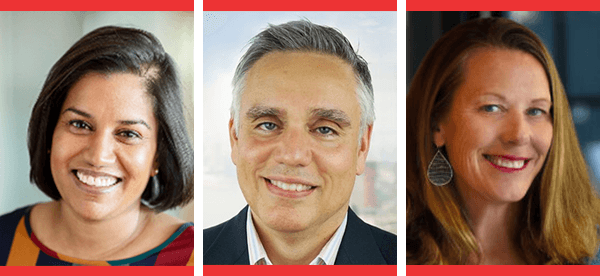
Payal Agrawal Divakaran, .406 Ventures
Steve Krupa, HealthEdge
Michelle Snyder, McKesson Ventures
Subscribe ON iTUNES

Don't miss an episode. Join the conversation by visiting our podcast channel on iTunes today and subscribe. It's fast and free!
 SUBSCRIBE ON iTUNES